On Being a Church Planter
Mid-America Journal of Theology 20 (2009): 159–75
Confessionally Reformed church planters have long been left to sift through church growth, Pentecostal, and Emerging Church literature for whatever might apply to them. Written by a church planter after nine years, this essay offers principles and aptitudes drawn from Reformed theology instead.
Pastors who want to plant confessionally Reformed churches have had little written for them. What guidance exists has usually meant sifting the church growth movement, Pentecostal church planting material, or at best the Emerging Church and the Acts 29 Network for whatever fragments transfer. A few resources had begun to remedy this by 2009: Westminster Seminary California's 1999 missions conference, the Orthodox Presbyterian Church's 2002 manual, and Mid-America Reformed Seminary's 2008 church planting workshop.
Writing at the moment when even the American press had noticed “the New Calvinism,” this journal article takes up the gap from the vantage of a man who had been planting since before he graduated seminary in 2000. The aim isn’t principles alone but their application to practice, to the person and character of the planter himself, on the conviction that theology is, in William Ames’s phrase, the teaching of living to God, and that church planting is punishing work physically, emotionally, mentally, and spiritually.
The first half sets out three foundational principles drawn from Acts 2:42. The planter must be devoted to theology, confessing the Word not by private interpretation but with the ancient creeds and the Reformed confessions he has subscribed. Everything is theological, and theology is what steadies a man; the article illustrates this with the Lord’s Day evening early in his ministry when four parishioners went to the hospital within five minutes of each other, and the Heidelberg Catechism’s teaching on fatherly providence was what kept him sane. The same commitment governs preaching, where the message and the method can’t be separated and the ministry is no place for ingenuity. He must be devoted to liturgy, making Lord's Day worship non-negotiable and holding Reformed worship with confidence rather than apology, since worship follows from theology and not in spite of it. Hyde notes that historic liturgical worship has drawn to his congregation the very young people the Emerging Church has been courting. And he must be devoted to community, taking up the Reformed practice of family visitation as his own, knowing his sheep by name, and practicing hospitality, which is love in action and which few visitors have ever received from a pastor.
The second half turns to aptitudes: the skills, gifts, and traits the work requires. A planter needs genuine passion for planting rather than a call taken for want of other options, since a man who wanted a large or established congregation will make himself and his people unhappy. He needs to be personable, out in the community rather than shut in his study, though personable is not the same as being a personality; Abraham Kuyper's critique of the American minister who starts his own church and gathers a circle around a talented speaker still applies. He needs to handle disappointment, including core members falling into public sin and earnest inquirers who never return, and to learn what a colleague taught Hyde early on, that the church planter is not the Holy Spirit. He needs self-motivation, the ability to delegate what is not essential to his calling, and some means of handling stress. The essay closes on the pace of the work: John Owen, prince of Puritans, pastored a congregation that grew by roughly eleven souls a year, and that is the kind of slow, steady growth a planting ministry should pray for.
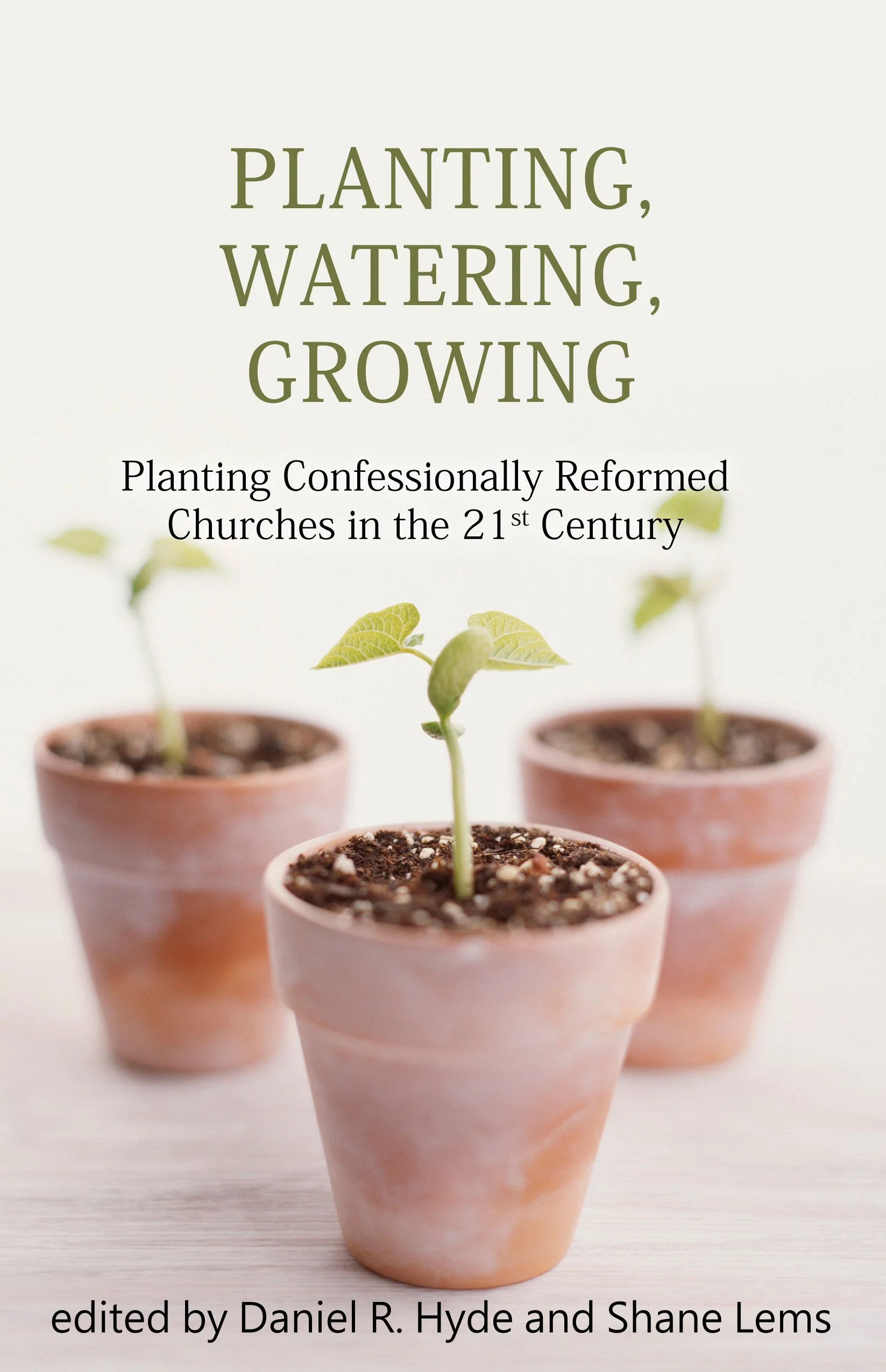
For more on church planting, see my co-edited book on my Books page
On Pastoral Ministry, see:
For citations, excerpts, translations, etc. of this academic journal article, see Permissions.
To attribute: Daniel R. Hyde, “On Being a Church Planter.” Mid-America Journal of Theology 20 (2009): 159–75.