Articles by Daniel R. Hyde
Some of these articles first appeared in peer-reviewed academic journals and scholarly venues written for colleagues in the academic guild and the ministerium—Calvin Theological Journal, Puritan Reformed Journal, Mid-America Journal of Theology, and The Confessional Presbyterian. Some are more popular pieces written for church members that read carefully. For a full list, see my Curriculum Vitae.
They explore the history and practice of Reformed liturgy (including the neglected place of absolution), the theology of the Heidelberg Catechism and the broader Three Forms of Unity, the task of preaching, and disputed questions in Reformed history and catholicity.
The journal articles date from 2006 to 2017, written across two decades of pastoral ministry and doctoral work at the Vrije Universiteit Amsterdam.
Each article is available in full text, as a PDF, or both.
The Kind of People God Uses
Paul says the gospel is carried in "jars of clay" — cheap, breakable vessels. This exposition of 2 Corinthians 4:1–12 argues that the weakness of the messenger is not an obstacle to God's power but the deliberate display of it, and that this holds for every servant in a congregation, not only the preacher.
Paul says the gospel is carried in "jars of clay" — cheap, breakable vessels. This exposition of 2 Corinthians 4:1–12 argues that the weakness of the messenger is not an obstacle to God's power but the deliberate display of it, and that this holds for every servant in a congregation, not only the preacher.
Originally delivered at an Oceanside United Reformed Church leadership training seminar, August 15, 2015.
God saves sinners. That's the message of the Bible. Amen? This reality must never grow old and dull to us. It must lead us to vitality in the Christian life! God possesses aseity: He’s self-sufficient and self-satisfied as Father, Son, and Holy Spirit. Yet to think he deigns and delights to save sinners is a thought that should never be far from our minds and hearts! That the immortal God saves mortal human beings! The infinite God saves finite creatures! "For surely it is not angels that he helps, but he helps the offspring of Abraham" (Heb. 2:16). What a God! He deserves our praise.
There's a double reason for praise: in his wisdom and power the kind of people God uses are foolish men[1] using the method of preaching, to tell the message of a crucified Savior.
The man is weak. "God has exhibited us apostles as last of all, like men sentenced to death, because we have become a spectacle to the world, to angels, and to men" and that "we are fools for Christ's sake" (1 Cor. 4:9, 10). In contrast to the strong and honorable Corinthians Paul said "we are weak…held…in disrepute…we hunger and thirst, we are poorly dressed and buffeted and homeless, and we labor, working with our own hands" (1 Cor. 4:10–12). In the world the apostles were "reviled…persecuted…slandered" and were "like the scum of the world, the refuse of all things" (1 Cor. 4:13).
The method is weak: preaching. Enough said!
The message is weak: "For the word of the cross is folly to those who are perishing" (1 Cor. 1:18 cf. vv. 21, 23, 25). This message is in contrast to what Paul calls "the wisdom of the world" (v. 20 cf. v. 21). The wise scribes were full of this wisdom (v. 20). Wise "debater[s] of this age" were full of it (v. 20). Yet, "the world did not know God through wisdom" (v. 21). The message of Christ and his cross was weak when measured by the earthly standards of signs and wisdom. Hence, it was "a stumbling block to Jews and folly to Gentiles" (v. 23).
God in his wisdom and in his power set it up this way so that we would praise him for his wisdom and praise him for his power. I want to exhort you to praise your God for his saving sinners by the means of men.
I also want to turn your attention to 2 Corinthians 4:1–12 to investigate the kind of people God uses. Be encouraged whether you're an official servant in your congregation, thinking of serving, or thinking you're the last person to serve: God uses humans. He can use you! What follows is not to be a technical exegesis, but my attempt to encourage you with two points and then exhort you with two points to serve in some capacity or another in your local congregation.
Know That God Uses the Means of People
Let me first encourage you. The kind of people God uses are people. It flows better to say "the means of men" but the "men" can be specific to males or generic of all people. Unfortunately our English language doesn't have the range of German, where you can speak of mann, menschen, and Menschheit. So I'll use people. We read in 2 Corinthians 4:1: "Therefore, having this ministry by the mercy of God." "This ministry" is what was described in chapter 3. New Covenant ministry is described in such lofty terms. It's a ministry of the Spirit not merely of the letter (3:6). It gives life not death (3:6). There's more glory than even that on Moses' face (3:7–11). It's a ministry of righteousness not of condemnation; of liberty because it lifts the veil from the heart of the sinner. "Having this ministry" New Covenant ministers are greater than Moses!
How so? "By the mercy of God." This shows us that it's nothing God of necessity must do, but that he has chosen to do so in his compassion towards sinners. Heinrich Bullinger once wrote in his Second Helvetic Confession, "It is true that God can by His power, without any means, take unto Himself a church from among men, but He had rather deal with men by the ministry of men." (Ch. 18). It's by "mercy" that we have "this ministry." In the words of P.E. Hughes, "Paul is a minister, not a master; a bond-servant, not an ecclesiastical lord."[2]
As such a minister he could say, "For what we proclaim is not ourselves, but Jesus Christ as Lord" (v. 5). All give an "amen" to that. But note: he continues with this amazing statement: "with ourselves as your servants for Jesus' sake" (v. 5). The message of Christ comes through the means of a servant for Christ. It's the same for all who serve in any capacity: God uses you.
Know That God Uses Frail People
Let me encourage you with a second consideration: The kind of people God uses are frail people. "But we have this treasure in jars of clay" (v. 7). The "treasure" is "the light of the knowledge of the glory of God in the face of Christ" (v. 6). Notice how he speaks of the "gospel" (v. 3), which he goes on to define even further as "the light of the gospel of the glory of Christ, who is the image of God" (v. 4). Then he simply speaks "proclaim[ing]…not ourselves, but Jesus Christ as Lord" (v. 5). Then comes this amazing statement: "For God, who said, 'Let light shine out of darkness,' has shone in our hearts to give the light of the knowledge of the glory of God in the face of Jesus Christ" (v. 6).
Why Does Paul Call Us “Jars of Clay”?
Paul's opponents were those he sarcastically called ὑπερλίαν ἀποστόλων, the "super-apostles" (11:5; 12:11). They made fun of Paul's bodily appearance and speech (10:10 cf. 10:1; 11:6; 12:7). Like ancient rhetoricians, their bodies were imposing; so Paul says we are like earthen vases that are frail: "But we have this treasure in jars of clay" (v. 7). I think Paul is playing up our weakness because it magnifies the power and grace of God: "For when I am weak, then I am strong" (12:10).
What Are “Jars of Clay”?
The ancient historian, Plutarch (46–120), described the victory procession of Lucius Aemilius Paullus Macedonicus after he defeated the Macedonians at the Battle of Pydna in 168bc. He said, "After the waggons laden with armour there followed three thousand men carrying coined silver in seven hundred and fifty vessels, each of which contained three talents and was borne by four men."[3]
What's the point of this illustration? John Owen (1616–1683) said it like this: "The ministry whereby the word is conveyed unto us is but a 'vessel;' and ministers are but 'earthen vessels,'—frail, weak, brittle, and it may be sometimes defiled. But still, in and by them the word of God is a 'treasure,' a heavenly treasure, enriching our souls."[4] So this means that a pastor, an elder, or anyone who serves in some way in the church is a sinner? This means they make mistakes? Sounds like a good reason not to listen to them! Again, Owen:
God hath been pleased to ordain that the word should be dispensed unto us by weak, sinful men like ourselves; whence it unavoidably follows that they may, and probably sometimes will, mix some of their infirmities with their work. To except, therefore, against this disposition of things, is to except against the wisdom of God, and that especial order which he hath designed unto his own glory, 2 Cor. iv. 7.
He then used this great illustration:
In a pipe which conveys water into a house there may be such a flaw as will sometimes give an entrance unto some dust or earth to immix itself with the water; will you therefore reject the water itself, and say, that if you may not have it just as it riseth in the fountain you will not regard it, when you live far from the fountain itself, and can have no water but such as is conveyed in pipes liable to such flaws and defects? Your business is to separate the defilement and use the water, unless you intend to perish with thirst.[5]
Know That God Uses Godly People
Now let me exhort you to be the kind of servant God uses, exemplified in Paul. The kind of people God uses are godly people. Note how in contrast to the false apostles, Paul says, "But we have renounced disgraceful, underhanded ways. We refuse to practice cunning or to tamper with God's word, but by the open statement of the truth we would commend ourselves to everyone's conscience in the sight of God" (v. 2).
But here's where we come up against a common place in our Protestant tradition. "I thought it didn't matter how holy the minister was because the Word is powerful?" Paul says here that through him as a minister the "God who" once "said, 'Let light shine out of darkness,' has shone in our hearts to give the light of the knowledge of the glory of God in the face of Jesus Christ" (v. 6). In the first creation God created by his fiat, his creative word; but now in his work of re-creation in the lives of sinners that Word has been made flesh in Jesus Christ and is proclaimed by a man of flesh. Yet it's God who powerfully works:
Wherefore when this Word of God is now preached in the church by preachers lawfully called, we believe that the very Word of God is proclaimed, and received by the faithful; and that neither any other Word of God is to be invented nor is to be expected from heaven: and that now the Word itself which is preached is to be regarded, not the minister that preaches; for even if he be evil and a sinner, nevertheless the Word of God remains still true and good. (Second Helvetic Confession of Faith, ch. 1)
But this doesn't negate the necessity of holiness in a servant. Paul says his methods and motives in ministry are godly ones. He tells Timothy elsewhere to guard his doctrine and life because both are life giving to himself and his hearers (1 Tim. 4:16). In the oft-quoted words of Robert Murray McCheyne (1813–1843), "The greatest need of my people is my personal holiness." But you may not know that he also said it more forcefully like this:
Study universal holiness of life. Your whole usefulness depends on this, for your sermons last but an hour or two; your life preaches all the week. If Satan can only make a covetous minister a lover of praise, of pleasure, of good eating, he has ruined your ministry.
Get your texts from God—your thoughts, your words, from God. In great measure, according to the purity and perfections of the instrument, will be success. It is not great talents God blesses so much as great likeness to Jesus. A holy minister is an awful weapon in the hand of God. A word spoken by you when your conscience is clear, and your heart full of God's Spirit, is worth ten thousand words spoken in unbelief and sin.
Know That God Uses Sacrificial People
Let me give you a second exhortation: The kind of people God uses are sacrificial people. Back to that illustration of "treasure in jars of clay" (v. 7). I told a brother recently that in our terminology this means we are Dixie cups. We're made to be used, thrown away, and replaced! How so?
First, we sacrifice ourselves so that God is glorified: "to show that the surpassing power belongs to God and not to us" (v. 7). You don't exist for yourself as a Christian! You belong, body and soul, both in life and in death, to your faithful Savior Jesus Christ, in the memorable words of the Heidelberg Catechism (Q&A 1).
Second, we sacrifice ourselves so that others are benefited. Paul goes on to recount his life as an apostle: Eddie Bauer edition SUV with leather interior, private chauffeur, private body guard, front parking space at church…NO! He says, "We are afflicted in every way, but not crushed; perplexed, but not driven to despair; persecuted, but not forsaken; struck down, but not destroyed" (vv. 8–9). And then notice this: "always carrying in the body the death (νέκρωσιν; process of 'dying') of Jesus, so that the life of Jesus may also be manifested in our bodies. For we who live are always being given over to death for Jesus' sake, so that the life of Jesus also may be manifested in our mortal flesh. So death is at work in us, but life in you" (vv. 10–12).
What a God! Amen? What a God! The kind of people God uses in his wisdom and power are just like you.
Now go; serve!
Notes
- I am bound by ordination oath that the ministry of preaching is restricted to men. See my With Heart and Mouth: An Exposition of the Belgic Confession (Grandville: Reformed Fellowship, 2008), 409–410. ↩
- Philip Edgcumbe Hughes, Paul’s Second Epistle to the Corinthians (NICNT), 131. ↩
- Plutarch, Life of Aemilius (Loeb), 32. ↩
- John Owen, An Exposition of the Epistle to the Hebrews, 4:557–58. ↩
- Owen, Hebrews, 4:558. ↩
Related writings:
Anointing the Sick with Oil: A Missing Aspect of Pastoral Ministry in the Reformed Tradition
“Continuing in Prayer,” in Faithful and Fruitful: Essays for Elders and Deacons, ed. William Boekestein and Steve Swets (Reformed Fellowship, 2019).
© 2026 Daniel R. Hyde. Permission is granted to reprint this article in full, unaltered, for non-commercial use, provided the attribution below is included and links to the original. For excerpts, translations, or commercial use, see Permissions.
To attribute: Daniel R. Hyde, "The Kind of People God Uses," https://www.danielrhyde.com/articles/the-kind-of-people-god-uses. Used by permission.
Ministering after Miscarriages
Seminary didn't prepare me for this. Miscarriage is the most common form of pregnancy loss, and it will come to your congregation. Here is pastoral counsel drawn from Scripture, the Canons of Dort, and ten years of grieving alongside God's people.
Seminary rarely prepares a pastor for the day a couple in his congregation loses a child to miscarriage. This lecture offers counsel on being prepared, being involved, and being a minister when a family’s life is broken.
This lecture was first given to the students of the United Reformed Churches in North America (URCNA) at Westminster Seminary California on February 8, 2011.
Unless seminaries have changed, seminarians won’t deal with ministering after miscarriages. Or what if there’s a tragic accident? How do you minister to a family grieving the loss of child by SIDS? It’s the most challenging pastoral issue I learned to face in my first ten years as a gospel minister. Seminary didn’t prepare me to deal with it. Therefore, you need to be. You will deal with this terrible providence as a pastor. Your theology must be exercised and ready.
Miscarriage tears my heart out and leaves me speechless. Seeing unbearable grief on the faces of your beloved brothers and sisters does this. My grief is nothing compared to that of the priceless women and men who’ve actually experienced it. I know if you’re reading this, and you've gone through miscarriage, those feelings may be coming back. I grieve with you. I’ve also learned in pastoral ministry that those who can’t have children also feel traumatized. I’ve ministered to you, too. It’s one thing to confess the comfort of Canons of Dort 1.17 (see below); ministering it after miscarriages is quite another.
What’s my counsel on ministering after miscarriages?
Be Prepared
Ministering after miscarriages means being prepared.
Do you know miscarriages are prominent? It’s the most common type of pregnancy loss according to the American College of Obstetricians and Gynecologists (ACOG). The most rigorous recent estimate in a 2021 review in The Lancet, pooled nine studies, and puts the risk at 15.3% of all recognized pregnancies. That’s 23 million miscarriages worldwide each year. That’s forty-four every minute. Nearly 11% of women have experienced at least one. Let that sink in for a moment. That means in every congregation, you’re already ministering to women who’ve experienced miscarriage, whether you know it or not..
Sadly, it’s part of the frail, frustrating, and futile creation realm in this age (Rom. 8:18–22). Our old Reformation-era Form for Baptism calls this life “nothing but a continual death.” That’s the harsh reality. Be prepared.
Miscarriage causes a whole list of difficult questions. I often refer to 1 Peter 3:15 in my preaching about the Christian’s preparation to be a witness to Christ in the world. Every Christian is to be “prepared to make a defense to anyone who asks you for a reason for the hope that is in you.” This passage applies to pastors, too. When our own people suffer a miscarriage and are looking to us for hope, give them an answer!
Theological Questions
Theologian Dan Doriani summarizes some of his own theological questions:
In the quieter moments of the next two days, very different questions troubled me—intellectual questions contradicting my convictions about the unborn and my feelings about our child. I wondered, is heaven populated with the unborn? Are all the unborn there? If so, are the Soviets, who are said to perform three abortions for every live birth, filling heaven with their monstrous practice? Or are only the progeny of believers there? Even so there must be billions, since miscarriage is so common. How does that affect their eternity? Or perhaps (the Bible says so little about these matters)—perhaps the orthodox doctrine is wrong. Perhaps my child was not yet a person, not yet “my child.” It is hard to imagine the life of a former fetus in heaven. (Doriani, “Miscarriage;” see below)
Practical Questions
Some mothers and fathers may have these kinds of questions. Be prepared—even that some may not. Again, Doriani goes on to list some of the more practical kinds of questions you'll face:
More painfully, I wondered, how did my son, so small, so undeveloped, die? Like a higher animal, feeling but without self-consciousness? Like a worm, all but insensitive? Like a man, carried off by angels, rejoicing? Our defense of the unborn, our speeches and sermons and “silent scream” videos force these questions. If abortion is murder, miscarriage is a death in the family. But it is a strange kind of death. Where is the funeral, the gathering of family? It is the death of someone whom no one knew, except perhaps the mother. There were other questions. Why was I in more pain than my wife? Why did one daughter act as if nothing had happened? And most troubling, why did I feel polluted, almost guilty? The next night I went jogging. Alone in the darkness with God, answers came. I began to understand my wife’s subdued response. She felt something was amiss, and had never attached herself to one she would never hold.
Be Involved
Ministering after miscarriages means treating it like another death of a family member in the congregation. As Doriani writes, “If abortion is murder, miscarriage is a death in the family.”
Being involved in the Reformed tradition means going to visit like you would for any death.
Being there means listening to grieve and questions. It also means not having pat answers ready. Listen; sympathize; grieve.
When you go, read the Word. Comfort like you would in any other visit.
Of course, involvement as a minister means praying together.
Then you leave.
Now what? Stay involved. Offer to contact the deacons to provide mercy meals. Ask if you can let the congregation know so they can pray. Is this announcement via email only? In the bulletin? In public prayer? However, involve yourself by exhorting the rest of the church family to be sensitive.
Be a Minister
Ministering after miscarriages means being a minister. What do you do?
Know Canons of Dort 1.17:
Since we must make judgments about God’s will from his Word, which testifies that the children of believers are holy, not by nature but by virtue of the gracious covenant in which they together with their parents are included, godly parents ought not to doubt the election and salvation of their children whom God calls out of this life in infancy.
I've written in great detail on the history and meaning of this article in Grace Worth Fighting For. I've also preached on “What If My Child Dies?” Here I’ll make just a few comments.
Canon 1.17 is the pastoral basis of the confessionally Reformed minister. Learn this article; use it.
As we know within the Dutch Reformed tradition, this is a debated issue. The debate is whether covenant children who die early in life are in heaven or not. The Westminster Confession offers a theologically correct assessment no Reformed believer will deny:
Elect infants, dying in infancy, are regenerated and saved by Christ through the Spirit, who worketh when, and where, and how he pleaseth. (10.3; emphasis mine)
Yet Dort reminds us we have to deal with things “below”: “we must make judgments about God’s will from his Word.” We don’t know the eternal decree of God. Therefore, we must judge things from within our creaturely bounds of the covenant and visible church. The delegates at Dort sought to answer a pastoral question pastorally.
The issue for those in churches that confess the Canons is whether they describe certainty about the children or only the attitude of the parents. An example of the former is Herman Bavinck (Reformed Dogmatics, 4:724–27; Saved by Grace, 69); of the latter, is Herman Hoeksema (Believers and their Seed, 149–58). Without getting into all the historical and theological weeds here, I’ll let you consult the resources below.
Read the Word
It goes without saying: we need to base our pastoral comfort upon the Word. Read Psalm 139 with a grieving mother, couple, and family. Hear David’s confidence of being in the Lord’s presence even in the womb. Read of his agony and hopeful response after his son’s death in 2 Samuel 12: “I shall go to him, but he will not return to me” (v. 23). Later, Rabbi Saul-turned-Apostle Paul said,
But we do not want you to be uninformed, brothers, about those who are asleep, that you may not grieve as others do who have no hope. For since we believe that Jesus died and rose again, even so, through Jesus, God will bring with him those who have fallen asleep….For the Lord himself will descend from heaven…and the dead in Christ will rise first. Then we who are alive, who are left, will be caught up together with them in the clouds to meet the Lord in the air. (1 Thess. 4:13–14, 16–17)
Canon 1.17 comes from such passages. Children of believers are members of the covenant of grace. Thus, we read the Word to our broken members from within that rich and comforting status as the people of God. This means offering strong encouragement. They don’t need to doubt where their lost child is.
The lost child they may have never held in their arms isin the arms of Jesus!
Pray
Above all, draw near to the throne of grace together. The Psalms and the wonderful prayers of our tradition help. For example, we in the URCNA have three Prayers for the Sick and the Spiritually Distressed. Prayer 1 says in part:
Eternal God, the only Creator, Preserver, Judge, and Savior of the world, You alone hold the powers of life and death. Our Lord Jesus Christ, when He had conquered death and hell, announced, “I was dead, but I am alive forevermore, and I have the keys of death and Hades in my hand.” Yet often our circumstances seem to testify against Your promise. What we see does not appear to agree with what we have heard. Yet, even at the cross, where You seemed so absent and Your Son seemed so cruelly and unjustly abandoned by You, we have been taught that He was thereby fulfilling Your purposes to redeem us from the power of darkness. We confess that our hearts are so bound to the realities that we see with our eyes in the moment, that we easily forget the greater realities that we hear with our ears through Your Word.
We also have a very old series of meditations entitled Consolation of the Sick. Several of these have appropriate meditations for such an occasion.
In sum, ministering after miscarriages is inevitable. It’s also indispensable.
Prepare now.
Be involved when it comes.
Most of all, be a minister of the gospel’s treasure as a jar of clay when life is broken (2 Cor. 4:7).
Some Resources on Miscarriage
Dan Doriani, “Miscarriage of an Early-Term Infant,” in The Hardest Sermons You’ll Ever Have to Preach, ed. Bryan Chapell (Zondervan, 2011). Paperback | Kindle [affiliate]
Henk Kleyn, “Malachi’s Short Story”
Glenda Mathes, Little One Lost: Living with Early Infant Loss (Reformed Fellowship, 2012). Paperback | Kindle [affiliate]
Reggie Weems, Help! My Baby Has Died (Day One, 2010). Paperback [affiliate]
David Wiersbe, Gone but Not Lost: Grieving the Death of a Child (Baker, 1992). Paperback | Kindle [affiliate]
Some Resources on Understanding Canons of Dort 1.17
Herman Bavinck, Reformed Dogmatics, Volume 4: Holy Spirit, Church, and New Creation, ed. John Bolt, trans. John Vriend (Baker Academic, 2008), 724–27. Hardcover | Kindle [affiliate]
—. Saved by Grace: The Holy Spirit’s Work in Calling and Regeneration, trans. Nelson D. Kloosterman, ed. J. Mark Beach (Reformation Heritage Books, 2008), 69. Paperback | Kindle
John Calvin, "Letter CCCLXIV–To a Gentleman of Provence," in Selected Works of John Calvin, Volume 6 (Baker, 1983), 71–73.
Lee Gatiss, From Life’s First Cry: John Owen on infant baptism and infant salvation, St. Antholin’s Lectureship Charity Lecture 2008 (Latimer Trust, 2008). Kindle [affiliate]
W. Robert Godfrey, “Election and Covenant: The Synod of Dort and Children Dying in Infancy” (unpublished essay).
N. H. Gootjes, “Can Parents Be Sure?”Clarion 44:20 (October 6, 1995) and Clarion 44:21 (October 20, 1995).
John Owen, “Letter 83: To Lady Elizabeth Hartopp,” in The Correspondence of John Owen (1616–1683): With an Account of His Life and Work, ed. Peter Toon (James Clarke & Co. Ltd., 1970), 157–58.
Cornelis P. Venema, “The Election and Salvation of the Children of Believers Who Die in Infancy: A Study of Article I/17 of the Canons of Dort.”Mid-America Journal of Theology 17 (2006): 57–100.
Related writings:
Anointing the Sick with Oil: A Missing Aspect of Pastoral Ministry in the Reformed Tradition
“Continuing in Prayer,” in Faithful and Fruitful: Essays for Elders and Deacons, ed. William Boekestein and Steve Swets (Reformed Fellowship, 2019).
© 2026 Daniel R. Hyde. Permission is granted to reprint this article in full, unaltered, for non-commercial use, provided the attribution below is included and links to the original. For excerpts, translations, or commercial use, see Permissions.
To attribute: Daniel R. Hyde, "Ministering After Miscarriages," https://www.danielrhyde.com/articles/ministering-after-miscarriages. Used by permission.
Anointing the Sick with Oil: A Missing Aspect of Pastoral Ministry in the Reformed Tradition
Reformed churches have a strong tradition of elders as officers of prayer and care — yet one thing has been missing since the sixteenth century. This study works through James 5:14–15 in its context, weighs the medicinal, Roman Catholic, historic Reformed, and Pentecostal readings, and argues that anointing with oil remains a valid ministry for Reformed elders today.
Reformed churches have a strong tradition of elders as officers of prayer and care. Yet one thing has been missing since the sixteenth century. This study works through James 5:14–15 in its context, weighs the medicinal, Roman Catholic, historic Reformed, and Pentecostal readings, and argues that anointing with oil remains a valid ministry for Reformed elders today.
What follows is a paper I was tasked to write sometime between 2000–2002 when the Oceanside United Reformed Church was still a church plant. I have slightly edited it for style and clarity, but the substance remains the same. In other words, it is to be viewed as one preliminary paper researching the topic and not as a definitive statement.
As Reformed churches, we have a strong tradition of the elders in a congregation being officers of prayer as well as care by visiting the flock.[1] That being said, there is and has been something missing from this ministry of prayer and care since the establishment of the Reformed churches in the sixteenth century—the anointing with oil and prayer over the sick according to James 5:14-15.
Described as “one of the most fascinating passages in the whole letter of James, and one which has excited a great deal of difference of opinion and not a little controversy,”[2] James’ words have been an all-too-easily dismissed and overlooked aspect of New Testament ministry within the Reformed tradition. The reason for this, historically, has been polemics with the Roman Catholic Church over the sacrament of extreme unction. This debate also has a contemporary twist in Reformed theology’s difference with Pentecostalism over the issue of the “sign gifts” (e.g., tongues, prophecy, words of knowledge).
The question of why Reformed churches do not practice what James seems to command, was one I was completely unaware of. That was, until a Berean in my parish wrote the consistory, asking us why we did not practice what these verses speak of. I was then assigned the task of researching the history of Reformed exegesis on this text and to bring a report to a future consistory meeting. My conclusion, as one converted and educated within Pentecostalism and later brought to a Reformed understanding of the Faith, is that there is a legitimate use of anointing with oil and prayer as prescribed by James; and this while holding to the classic “cessationist” viewpoint of the finality of God’s spoken Word in the Person of Christ (Heb. 1:1–2, 2:1–4) and inscripturated in the canon of the New Testament (cf. Belgic Confession, articles 3–7).
The purpose, then, of this essay is to demonstrate that what James 5:14–15 describes is a valid, ongoing ministry of the church that we as Reformed churches need to recover. This text will be interpreted in its context by examining the linguistic meaning of “oil,” by interacting with the various viewpoints on the interpretation of the anointing spoken of in this text, and then applying the results of this study to contemporary Reformed pastoral ministry.
James’ Use of “Oil” (ἐλαίῳ)
Our first step in approaching James 5:14, is to get a handle on what exactly the oil James prescribes for anointing. Then we will answer the question of what was James’ purpose for prescribing the use of oil. Generally speaking, in the ancient world, oil had two uses: first, as a medicinal agent, and, second, as a symbolic agent.
The Medicinal View
Because it could be used as medicine, some have concluded that James meant the oil of anointing merely for a healing/recuperative effect. This interpretation is based on three basic facts.
First, common agents such as oil, as well as wine, were used in the ancient world as medicine.[3] Biblically speaking, this use of oil as a medicinal agent goes as far back as Isaiah 1:6. On James 5:14 Robert Gundry emphasizes the fact of oil as medicine, saying, “Since olive oil was a common household remedy, James may have its medicinal properties in mind, as though to say, ‘Treat with medicine and pray for recovery.’”[4] Commonly cited as biblical corroboration is Paul’s famous advice to Timothy, who was suffering with some sort of ailment: “No longer drink only water, but use a little wine for the sake of your stomach and your frequent ailments” (1 Tim. 5:23).[5]
The second fact that is cited in treating the oil of James 5:14 merely as a medicinal agent is that linguistically, James uses the same Greek word for “oil” that Luke 10:34 uses when referring to oil as a medicine. In the parable of the Good Samaritan, Luke says, “He went to him and bound up his wounds, pouring on oil and wine.” We see this view advocated in the study notes on Luke 10:34 in the New Geneva Study Bible, which says, “Oil and wine were common remedies of that time and expressed the Samaritan’s compassion.”[6] As well, appeal can be made to Mark 6:13, in which the apostles went out, casting out demons as well as anointing the sick, who were then healed.
Third, it is sometimes said that James chose the verb ἀλείφω rather than χριω in speaking of “anointing.” The former word is marshaled as meaning “rubbing” oil on a person medicinally, rather than pouring or smearing oil in symbolically. The account of the apostles’ anointing and healing in Mark 6:13 is said to corroborate this view.
Response to the Medicinal View
This interpretive position is historically and linguistically reasonable. Yet, the traditional Reformed response to the view that the oil of James 5:14 was merely medicinal since, is exemplified by John Calvin, who simply said, “I cannot agree with those who think that it was medicine.”[7] Reformed biblical interpreters have followed Calvin in disagreeing with the medicinal view of oil for five reasons:
First, although it is without question that oil was used medicinally in the ancient world, it was not exclusively used for this purpose, as we will see below.
Second, Luke’s reference in the Parable of the Good Samaritan to oil being used as medicine in no way restricts James’ use from referring to another function. Just because Luke uses the word one way does not mean it must mean that in James.
Third, and most importantly, when the use of the word for “oil,” ἐλαίῳ, is considered in its context, it becomes clear that James prescribes its use because there is something more going on than just the healing of the body. James conceives of a link between physical healing (v. 15a) and a “spiritual” healing (v. 16), which is described as the forgiveness of sins (v. 15b), if sins have been committed.
Fourth, if James meant for oil to be used on the sick strictly as a means of healing the body, then why does he say that the elders of the church need to be the ones administering the oil along with prayer? The elders are the shepherds of the spiritual life of Christ’s sheep-pen, not medical doctors.
Fifth, the use of ἀλείφω does not argue against a symbolic anointing, even if it meant only to rub oil upon a person. Neither does the use of this word in Mark 6:13 prove a medicinal view. There Mark clearly shows the healings being “signs of the apostles,” along with the exorcisms, as confirming the unique authority of their preaching.
The Symbolic View
The second major view of the oil mentioned in James 5:14 emphasizes its use in Scripture as a visible sign of something, whether the Holy Spirit or simply consecration to God. This was the position of Calvin, and is that of this author, as James speaks of oil in a symbolic manner. There are two main reasons for saying this:
First, throughout the unfolding of redemptive history in Scripture, oil was used by the faithful primarily as a symbol in order to visibly signify a spiritual reality. As Douglas Moo points out,
Anointing with oil is frequently mentioned in the Old Testament as a symbolic action according to which what is anointed is set apart for God’s service or blessing[…]By anointing the sick person with oil, then, the elders are symbolically setting that person aside for the Lord’s special attention as they pray.[8]
We see this use of oil as a symbol in several representative texts. In Psalm 45:7, the sons of Korah magnify the king, whom “God has anointed[…]with the oil of gladness.” When the New Testament uses this part of Psalm 45, it is of the King, our Lord Jesus Christ, and his being anointed with the Holy Spirit (Heb. 1:9).[9] Further back in the revelation of the Old Covenant is Exodus 29:7, in which Aaron and his sons were anointed with oil to symbolize their being set apart for priestly service. Finally, Psalm 133:2–3 describes the pleasantness of “brothers dwell[ing] in unity” with the simile, “It is like the precious oil on the head[…]It is like the dew of Hermon.” Again, the New Testament explains to us that this blessed unity spoken of among the brethren of God’s people, is a fruit of the work of the Holy Spirit (Eph. 4:3). Thus, oil in Scripture is used symbolically for the Holy Spirit, consecration for God’s service, as well as the unity of the family of God which is brought about by the Holy Spirit.
Returning to our reasons for understanding that the oil of James 5:14 is not merely a healing agent, but an outward sign of a spiritual reality, is the second reason. As alluded to above, the anointing in James 5:14 is linked not only to physical healing but spiritual—the forgiveness of sins: “And the prayer of faith will save the one who is sick, and the Lord will raise him up. And if he has committed sins, he will be forgiven” (5:15).
It is important to note in passing, the pastoral explanation of this text. Note well that James does not link inseparably sickness with sin. There is not necessarily a link between the two, nor an inevitable conclusion to be drawn about a sick parishioner who needs the prayer of his/her elders. All one has to note are the words of our Lord on this matter (John 9:2–3). What James does state, however, is that when a person is healed physically by the means of anointing and prayer, a person is forgiven if he/she has sinned and has confessed that (v. 16).[10]
Truly, something more is going on in James 5 than mere physical healing, which we see in the forgiveness of sins which comes solely from the Lord, not from the oil. The medicinal view cannot account for this aspect of the text. After all, how does ordinary recuperation from a common remedy effect the forgiveness of sins? The oil of James 5:14, then, is not merely medicine, but a symbol of something beyond itself, something mysterious. That “something” is the One we call the Holy Spirit.
What is the Meaning of James’ Symbol?
Since James is speaking of “something more,” the question is, what exactly is the meaning and application of this anointing. There seem to be three major opinions regarding the meaning and ongoing function of the oil in James 5:14 among those who take it as a symbol.
Roman Catholic View
The practice of Rome as we know it today can be traced back in history to several notable occurrences. By the third century A.D., the oil used in anointing had to first be consecrated by the local bishop. Then, as time passed the anointing with oil was solely performed by priests by the tenth century. By the 12th century this anointing came to be called “extreme unction” and was reserved only for those dying. Then in the thirteenth century the “sacrament of the dying” was declared to be one of the seven sacraments.
In Rome’s polemics against Protestantism at the Council of Trent (1545–63), the sacrament of “extreme unction” was said to be “insinuated indeed in Mark, but recommended and promulgated to the faithful by James the Apostle, and brother of the Lord.”[11] Rome’s dogma is that the “oil blessed by a bishop”[12] represents the “grace of the Holy Spirit; whose anointing cleanses away sins, if there be any still to be expiated.”[13] For this reason, extreme unction came to be called “the completion[…]of the whole Christian life.”[14] In this understanding of the anointing prescribed by James, the “raising up” mentioned in James 5:15 is not physical healing, but a strengthening of the soul of “those especially who lie in such danger as to seem to be about to depart this life.”[15] Thus, extreme unction is given so that the sick person can bear “more easily the inconveniences and pains of his sickness; and more readily resists the temptations of the devil.”[16]
Response to the Roman Catholic View
Although agreeing with Rome that the oil signifies something more than physical healing, the arguments adduced by the Reformed polemicist and theologian Francis Turretin (1623–87) compel this Reformed minister against the teaching that this anointing is equated with the Roman sacrament of extreme unction.[17]
First, nowhere in Scripture is there any mention of the institution, substance, and form of administration of this sacrament by our Lord.
Second, the type of healing of James, like that of Mark 6:13 (in which, according to Trent, is “insinuated indeed” extreme unction), speaks of bodily healing, while extreme unction does not.
Third, James commands “anyone among you” who is sick to be anointed and prayed over while extreme unction only applies to the deathly ill.
Fourth, James commands “the elders” to be present when this anointing is administered while extreme unction is administered and attended by only one priest.
Fifth, James’ anointing was for the absolute end of healing and the conditioned end of remission of sins, while extreme unction inverts this.
The Historic Reformed View
It was in the context of polemical theology with Rome that Reformed exegetes came to their position. Reformed exegetes from the Reformation through our day, understand this anointing with oil and subsequent healing as being something that is no longer to be practiced by the Church. This was the position of Martin Bucer[18] (1491–1551), John Calvin[19] (1509–64), Zacharias Ursinus[20] (1534–83), Johannes Wollebius[21] (1586–1629), John Owen[22] (1616–83), Francis Turretin[23] (1623–87), Matthew Henry[24] (1662–1714), and B.B. Warfield.[25] Their reasoning went like this: since the supernatural “sign” gifts of the New Testament apostles have ceased, and since the outward sign of anointing with oil signified not an uncertain healing, but a certain, miraculous healing, therefore, to continue administering the outward sign of oil without the gift of healing would be to lie and give a false testimony to sick, wounded sheep.[26]
Response to the Historic Reformed View
Contemporary Reformed theologians and pastors generally agree with the Reformed exegetical tradition on these verses in rejecting the Roman Catholic application of James 5:14 to extreme unction, in maintaining that the anointing is not medicinal but rather for healing, and in holding to the “cessationist” view of the “sign” gifts of the apostolic age.
This writer disagrees with the conclusion that because of the cessation of the miraculous gifts, the anointing with oil in James is also to cease among us. This author disagrees because James 5:14 speaks not of the apostles doing the anointing, praying, and healing, but of the ordinary,[27] established church leaders—“the elders of the church.” As well, the general context of James 5:13–18 is the “prayer of a righteous person,” which has “great power,” and the specific qualifier James mentions in healing the sick is “the prayer of faith.” To these points we shall return below under our application.
The Pentecostal View
A more recent interpretation is that of Pentecostal or Charismatic churches, which maintain that the gift of healing is a part of the gospel of Jesus Christ. Characteristic of this view is the official doctrinal statement of the Assemblies of God (AG). This carries the same weight that the Reformed confessions do for us:
Divine healing is an integral part of the gospel. Deliverance from sickness is provided for in the atonement, and is the privilege of all believers. (Isa. 53:4–5; Matt. 8:16–17; James 5:14–16)[28]
To this is added the AG’s statements of generally held positions, codified in their “General Christian Doctrines.” While these are not on the same level as the “Statement of Fundamental Truths,” they express the common view of their ministers. The twelfth of which is “Laying on of Hands and Anointing the Sick with Oil,” which reads,
Why does the Assemblies of God follow the practice of laying hands on the sick and anointing them with oil? What greater purpose does this offer over regular prayer? Laying hands on the sick was a common practice in the Early Church. Jesus often laid hands on people before healing them (Mark 6:5; Luke 4:40; 13:13). Paul laid hands on a sick person and he was healed (Acts 28:8). Jesus said concerning His followers, “they will place their hands on sick people, and they will get well” (Mark 16:18).
Anointing with oil for many different purposes was commonly practiced throughout the Scriptures. The New Testament mentions it specifically in connection with praying for the sick. On one occasion Jesus sent out the twelve disciples on a mission; they “anointed many sick people with oil and healed them” (Mark 6:13). In a congregational situation, the usual procedure is for a sick Christian to call for the elders of the church to pray over him and to anoint him with oil (James 5:14–16).
In biblical times oil was commonly used as a healing agent (Luke 10:34). But when used by the early Christians for anointing purposes it was merely a symbolic reminder to God’s healing power. Today as then, the anointing oil itself has no healing power. Healing takes place by the power of the Holy Spirit (Acts 10:38), of whom oil is a symbol (Zech. 4:4–6).
In the Assemblies of God we believe neither the laying on of hands nor anointing with oil is indispensable for healing, for often in Scripture healing takes place without either. But at times the touch of a praying person and the application of oil are an encouragement to faith, and such a practice is enjoined by Scripture (James 5:14–16).[29]
Response to the Pentecostal View
In response, this author assumes that the Scriptures teach that the “sign” gifts of the apostles, among which is healing, has ceased as an ordinary part of New Covenant ministry.[30] But the most compelling biblical response to the view of the AG that healing as “an integral part of the gospel” and “provided for in the atonement,” is that the Scriptures define the nature and purpose of the atonement as the healing of our true and most serious sickness: sin.
Contemporary Application
While we do not agree with either Rome nor Pentecostalism, James’ command that the sick call for the elders of the church to administer anointing with oil accompanied by prayer should continue in Reformed churches today. This conclusion is based on the following.
First, the primary purpose of James’ instructions at the end of his epistle is for Christians to be engaged in prayer. The ancient church historian Eusebius described James himself as a man of prayer saying, “His knees grew hard like a camel’s because of his constant worship of God, kneeling and asking forgiveness for the people.”[31] In the immediate context of the verses at issue here, is the sharp contrast between swearing “either by heaven or by earth or by any other oath” (5:12) with “The prayer of a righteous person[…]in the name of the Lord” (5:16, 14). The anointing with oil and even the healing are peripheral in the flow of James’ argument. What matters is that the elders of the church pray for those who “call” for prayer. We miss this if we emphasize too much on how oil is to be administered, what kind of oil is to be used, how are we going to implement this? What James calls us to is a ministry of prayer we have missed for generations.
Second, James speaks of the one who is “sick” (ἀσθενεῖ), that is, “weak,” and “powerless”[32] in the body and not just “spiritually sick.”[33] As Douglas Moo points out, when this word is referring to some sort of “spiritual weakness,” this is made clear with a qualifying phrase, such as “in conscience” (1 Cor. 8:7) or “in faith” (Rom. 14:1,2).
In the Gospels, which seems to have influenced James the most, this word always refers to physical illness (Matt. 10:8, 25:36, 39; Mark 6:56; Luke 4:40; John 4:46, 5:3, 7, 6:2, 11:1, 2, 3, 6). As well, the verbs “save” (v. 15) and “heal” (v. 16) are used in the Gospels (e.g., cf. Matt. 9:21–22; Mark 3:4; Luke 7:50; John 11:12) to speak of physical restoration.[34] The term for “sick” in verse 14 is related to the word for “the one who is sick” (τὸν κάμνοντα) in verse 15. This second term is only used one other time in the New Testament, in Hebrews 12:3, where it speaks of the one who is weary and worn out. It seems clear, then, that James speaks of one who is too weak to get out of bed and attend public worship; this is why he/she must “call for the elders of the church” to have them “pray over him.”
What this means is that this text prescribes anointing by the elders for all those who are seriously sick. This is in contrast both to Rome’s restriction only to the deathly ill as well as Pentecostalism’s license in having “healing services” for any kind of illness or even just for those who desire to be anointed after a worship service and prayed for. The initiative is on the sick person, not the church to have special times of anointing and healing for anyone with fatigue, stress, or a cold. Practically, this means that the church must be educated on this topic, as well as be made aware of the elders’ practice so that they can knowledgeably call for the elders. This can be done in home visitation, new members’ classes, by way of a standing announcement in the bulletin, as well as through Christian education classes.
Third, it is “the elders of the church” (τοὺς πρεσβυτέρους τῆς ἐκκλησίας) whom we are told are to pray over the seriously sick. This group entails not just the minister, priest, healer, or “district elder,” but the entire “presbytery,” or corporate eldership. Therefore, the gathering of “the elders” for prayer over the seriously ill under their care is what is being alluded to here.
It is important to keep in view that James is speaking of the ordinary officers of established churches, as opposed to those with the extraordinary offices of apostle or prophet (Eph. 4:11) or those endued with the gift of healing (1 Cor. 12:9). The New Testament authors use the word “elder” (πρεσβύτερος) fourteen times in relation to the ruling members of the local congregation. They are mentioned as been the fixtures of the church of Jerusalem (11:30, 15:2, 21:18) and having been appointed in the churches of Lystra, Derbe, Iconium, and Antioch (Acts 14:23 cf. 20:17), while in the epistles they are described in more detail (cf. 1 Tim. 5:17, 19; Titus 1:5; 1 Peter 5:1). In none of these texts are elders given supernatural power; rather, they are designated as shepherds (Acts 20:28; 1 Peter 5:1), rulers (1 Tim. 5:17), overseers (Acts 20:28) and some are even teachers (1 Tim. 5:17). This evidence is important because the gifts of healing and miracles were not tied to the elders in the New Testament, and thus, this practice did not cease when the apostles ceased.
What this means for us is that we need to be aware that being an elder in a Reformed church entails being willing to assemble at a hospital or home over one of our brothers or sisters. The eldership has no place for fear, timidity, or sense of being uncomfortable. Our sheep look to us, and we must lead.
Fourth, the oil James prescribes does not heal magically, nor even does prayer. Only the Holy Spirit can heal. When we anoint with oil, we are setting aside a sick person as especially devoted to the Lord as an object of care,[35] while confessing that it is the Holy Spirit alone, the “Lord and Giver of life” (Nicene Creed) who can raise the sick one up both from physical ailment (v. 15) as well as spiritual depths (vv. 15b, 16).
What is so wonderful is that James’ epistle indicates that God the Holy Spirit does his healing work through the means of “the prayer of faith”[36] of the elders, accompanied by the outward sign of oil.[37] Thus we can answer those who say that healing was a necessary result of this anointing, by saying that James qualifies the “guarantee” of healing with the phrase “the prayer [vow] of faith.” Pastorally speaking, then, when a person is not healed, it is not their lack of faith but in a real sense, even the weak prayers of the elders; ultimately, though, whether the Lord will heal or not is his prerogative and a part of his secret counsel. In view of this we must lift up our eyes in hope and respect.
Lastly, although the apostolic age and the “sign” gifts have ceased, no one can limit or negate the sovereign power of the Holy Spirit throughout the generations. We must recapture our sense and reliance upon the Holy Spirit as Reformed Christians. It was the Calvinists who re-emphasized the work of the Holy Spirit in their writings, preaching, and confessional documents. As Sinclair Ferguson, says,
No right-thinking Christian would deny that God continues to be active in the world, to do wonderful things for his people, and especially to answer their prayers in keeping with his promises. It is still appropriate for the sick not only to consult a doctor but to ‘call the elders of the church to pray over him and anoint him with oil in the name of the Lord’. The promise remains that ‘the prayer offered in faith will make the sick person well; the Lord will raise him up’ (Jas 5:14–15). People continue to be healed by God — through, above and even against means. Indeed, writes John Owen, ‘It is not unlikely but that God might on some occasions, for a longer season, put forth his power in some miraculous operations.’[38]
Thus, it is precisely because we as Calvinists believe in the Lord and Giver of life that we need to add to our elders’ existing ministry of prayer and care, the anointing and prayer over the seriously sick in our day. This is not only exegetically respectable, but also pastorally necessary.
Postscript: A Proposed Order of Prayer
¶ After the sick member has called for the elders, the elders assemble at an appointed time to the place where the sick member is located.
¶ Then, one of the elders leads a reading of the words of James 5:13–18.
¶ A brief explanation of several points in James 5:14–15 ensues:
First, James calls us to be a people of prayer in every station in life, whether we are suffering, cheerful, sick, or in need of forgiveness (other texts such as Pss. 50:14–15, 62:8 may be read).
Second, James calls the elders to be concerned for the well-being of the whole person, spiritually as well as physically.
Third, although the Scriptures do not necessarily link sickness as a result of specific sin, this time of prayer provides an opportunity for the sick to repent of sin and seek forgiveness.
Fourth, the use of oil in anointing is not a sacrament nor a “magical” element, but a sign of setting aside a person for God’s special care. As well, oil is a symbol of the Holy Spirit, who is the Lord and Giver of life.
Fifth, we must rest, ultimately, in the sovereignty and good pleasure of God, who many times has even better plans for us than to heal us physically.
¶ If the sick person desires to make confession of sins which burden their conscience, the elders are to ask them to confess them at this time, upon which, they are to exercise the keys of the kingdom and declare the promises of God’s forgiveness (texts such as 1 John 1:9 should be read and applied).
¶ After this, the sick person is to be anointed with oil upon their forehead “in the name of the Lord.”
¶ The elders then pray for the sick person.
Notes
1. See article 23 of the Church Order of Dort, as found in The Psalter (Reformation Heritage Books edition; Eerdmans, 1999), 181–82; Psalter Hymnal (Christian Reformed Church, 1934), 118. Cf. the comments upon this article in Idzerd Van Dellen and Martin Monsma, The Church Order Commentary (Credo Books, reprinted 2003), 107–111.
2. J. A. Motyer, The Message of James, The Bible Speaks Today (IVP, 1985), 189.
3. Douglas Moo cites the second-century physician Galen in this light. The Letter of James, The Pillar New Testament Commentary (Eerdmans, 2000), 239.
4. Robert H. Gundry, A Survey of the New Testament (3rd ed.; Zondervan, 1996), 436.
5. Unless otherwise indicated, all Scripture quotations are from The Holy Bible, English Standard Version, copyright © 2001 by Crossway Bibles, a division of Good News Publishers. Used by permission. All rights reserved.
6. New Geneva Study Bible (Thomas Nelson, 1995), 1625.
7. Commentaries on the Epistle of James, trans. Rev. John Owen, Calvin’s Commentaries, 22 vols. (Baker, reprinted 1996), 22:355–56.
8. Evangelical Commentary on the Bible, ed. Walter A. Elwell (Baker, 1989), 1162.
9. Cf. John Calvin, Commentaries on the Epistle to the Hebrews, trans. Rev. John Owen, Calvin’s Commentaries, 22 vols. (Baker, reprinted 1996), 22:46; John Owen, Discourse Concerning the Holy Spirit, The Works of John Owen, 16 vols. (Banner of Truth, reprinted 1994), 3:171; Heidelberg Catechism, Q&A 31–32.
10. The question, then, has been asked, “Does this mean that the sick person is not yet forgiven?” The first thing to keep clear is that there is a difference between our being once for all forgiven when we are justified by faith alone in Christ alone and the ongoing forgiveness that we need as those simultaneously justified and sinful (cf. Matt. 6:12; 1 John 1:9). To this must be added the fact that the New Testament does give evidence that sickness can be linked to public, gross immorality (e.g., 1 Cor. 11:30). Whether or not this still happens, I do not know. All I know is that there is something going on in the New Testament era that is beyond my comprehension.
11. The Canons and Decrees of the Council of Trent, Fourteenth Session, On the Sacrament of Extreme Unction, chapter I, in The Creeds of Christendom, ed. Philip Schaff, rev. David S. Schaff, 3 vols. (Baker, reprinted 1993), 2:160.
12. Ibid., 2:160, Session 14, chapter I.
13. Ibid., 2:161, Session 14, chapter II.
14. Ibid., 2:159, Session 14, chapter II.
15. Ibid., 2:162, Session 14, chapter III.
16. Ibid., 2:161, Session 14, chapter II.
17. Francis Turretin, Institutes of Elenctic Theology, trans. George Musgrave Giger, ed. James T. Dennison, Jr., 3 vols. (P&R, 1997), 19th Topic, Question 31, XXXII.
18. Martin Bucer, The Common Places of Martin Bucer, trans. and ed., D.F. Wright, The Courtenay Library of Reformation Classics 4 (The Sutton Courtenay Press, 1972), 91; cf. Bucer’s Censura on the 1549 Book of Common Prayer in Martin Bucer and the Book of Common Prayer, trans. E.C. Whitaker, Alcuin Club Collections No. 55 (Mayhew-McCrimmon, 1974), 124–26.
19. Calvin, James, 22:356; Institutes of the Christian Religion, trans. Henry Beveridge (Eerdmans, 1997), 4.19.18–21.
20. Zacharias Ursinus, Commentary on the Heidelberg Catechism, trans. G.W. Williard (1892; repr.; P&R, 1985), 353.
21. Johannes Wollebius, Compendium Theologiae Christianae in Reformed Dogmatics, ed. J.W. Beardslee (Oxford University Press, 1965), 128.
22. John Owen, A Discourse of Spiritual Gifts, The Works of John Owen, 16 vols. (Banner of Truth, reprinted 1995), 4:465.
23. Turretin, Institutes, 556–58.
24. Matthew Henry’s Commentary on the Whole Bible (Hendrickson, 1991), 2419–20.
25. B.B. Warfield, Counterfeit Miracles (Banner of Truth, reprinted 1976).
26. Thus Calvin, in typical satirical fashion, says of the Papists who continue the outward sign, that they “are not the true followers, but the apes of the apostles.” Calvin, James, 22:356.
27. On the distinction between extraordinary and ordinary offices in the Church see Louis Berkhof, Systematic Theology (4th edition; Eerdmans, reprinted 1994), 585–87.
28. “Statement of Fundamental Truths,” article 12, Assemblies of God (USA), https://ag.org/beliefs/statement-of-fundamental-truths (Accessed 1 September 2026).
29. “Laying on of Hands and Anointing the Sick with Oil,” Assemblies of God (USA), General Christian Doctrines. https://web.archive.org/web/20030212054637/www.ag.org/top/beliefs/christian_doctrines/gendoct_12_sick.cfm (Accessed 1 September 2026).
30. See O. Palmer Robertson, The Final Word: A Biblical Response to the Case for Tongues and Prophecy Today (Banner of Truth, reprinted 1997); Anthony A. Hoekema, What About Tongue Speaking? (Eerdmans, 1966); Richard B. Gaffin, Perspectives on Pentecost (P&R, 1979); Sinclair Ferguson, The Holy Spirit (IVP, 1996).
31. Eusebius, The Ecclesiastical History, trans., Kirsopp Lake (Harvard University Press, 1965), I:170–71.
32. Walter Bauer, A Greek-English Lexicon of the New Testament and Other Early Christian Literature, trans. & rev. W.F. Arndt, F.W. Gingrich, and F.W. Danker (University of Chicago Press, 1979), 115.
33. Contra C. Armerding, “‘Is Any Among You Afflicted’: A Study of James 5:13–20,” BibSac 95 (1938): 195–201; C. Pickar, “Is Anyone Sick among You?” Catholic Biblical Quarterly 7 (1945): 165–74; D.R. Hayden, “Calling the Elders to Pray,” BibSac 138 (1981): 258–86.
34. Moo, James, 237.
35. See G. Shogren, “Will God Heal Us? A Re-Examination of James 5:14–16a,” Evangelical Quarterly 61 (1989): 99–108.
36. Cf. Edmund Clowney, The Church, Contours of Christian Theology (IVP, 1995), 243.
37. Rowland S. Ward believes the phrase “the prayer of faith” is “the sick person’s believing response to the grace of God in confession rather than the prayer of the elders.” Blessed By the Presence of the Spirit: The Authentic Charismatic Church (New Melbourne Press, 1997), 78.
38. Ferguson, The Holy Spirit, 234–35.
Related writings:
A Well-Ordered Church: Laying a Foundation for a Vibrant Church [with William Boekestein] (Evangelical Press, 2015)
“Continuing in Prayer,” in Faithful and Fruitful: Essays for Elders and Deacons, ed. William Boekestein and Steve Swets (Reformed Fellowship, 2019).
For another excellent, contemporary Reformed exposition of this passage, see Chris Hutchinson, “The Oil of Gladness: a Neglected Ministry.”
© 2026 Daniel R. Hyde. Permission is granted to reprint this article in full, unaltered, for non-commercial use, provided the attribution below is included and links to the original. For excerpts, translations, or commercial use, see Permissions.
To attribute: Daniel R. Hyde, "Anointing the Sick With Oil: A Missing Aspect of Pastoral Ministry in the Reformed Tradition," https://www.danielrhyde.com/articles/anointing-the-sick-with-oil. Used by permission.
On Being a Church Planter
There is little written on church planting from a confessionally Reformed perspective. Drawing on nearly a decade of planting, this essay offers principles and aptitudes for the work.
Mid-America Journal of Theology 20 (2009): 159–75
Confessionally Reformed church planters have long been left to sift through church growth, Pentecostal, and Emerging Church literature for whatever might apply to them. Written by a church planter after nine years, this essay offers principles and aptitudes drawn from Reformed theology instead.
Pastors who want to plant confessionally Reformed churches have had little written for them. What guidance exists has usually meant sifting the church growth movement, Pentecostal church planting material, or at best the Emerging Church and the Acts 29 Network for whatever fragments transfer. A few resources had begun to remedy this by 2009: Westminster Seminary California's 1999 missions conference, the Orthodox Presbyterian Church's 2002 manual, and Mid-America Reformed Seminary's 2008 church planting workshop.
Writing at the moment when even the American press had noticed “the New Calvinism,” this journal article takes up the gap from the vantage of a man who had been planting since before he graduated seminary in 2000. The aim isn’t principles alone but their application to practice, to the person and character of the planter himself, on the conviction that theology is, in William Ames’s phrase, the teaching of living to God, and that church planting is punishing work physically, emotionally, mentally, and spiritually.
The first half sets out three foundational principles drawn from Acts 2:42. The planter must be devoted to theology, confessing the Word not by private interpretation but with the ancient creeds and the Reformed confessions he has subscribed. Everything is theological, and theology is what steadies a man; the article illustrates this with the Lord’s Day evening early in his ministry when four parishioners went to the hospital within five minutes of each other, and the Heidelberg Catechism’s teaching on fatherly providence was what kept him sane. The same commitment governs preaching, where the message and the method can’t be separated and the ministry is no place for ingenuity. He must be devoted to liturgy, making Lord's Day worship non-negotiable and holding Reformed worship with confidence rather than apology, since worship follows from theology and not in spite of it. Hyde notes that historic liturgical worship has drawn to his congregation the very young people the Emerging Church has been courting. And he must be devoted to community, taking up the Reformed practice of family visitation as his own, knowing his sheep by name, and practicing hospitality, which is love in action and which few visitors have ever received from a pastor.
The second half turns to aptitudes: the skills, gifts, and traits the work requires. A planter needs genuine passion for planting rather than a call taken for want of other options, since a man who wanted a large or established congregation will make himself and his people unhappy. He needs to be personable, out in the community rather than shut in his study, though personable is not the same as being a personality; Abraham Kuyper's critique of the American minister who starts his own church and gathers a circle around a talented speaker still applies. He needs to handle disappointment, including core members falling into public sin and earnest inquirers who never return, and to learn what a colleague taught Hyde early on, that the church planter is not the Holy Spirit. He needs self-motivation, the ability to delegate what is not essential to his calling, and some means of handling stress. The essay closes on the pace of the work: John Owen, prince of Puritans, pastored a congregation that grew by roughly eleven souls a year, and that is the kind of slow, steady growth a planting ministry should pray for.
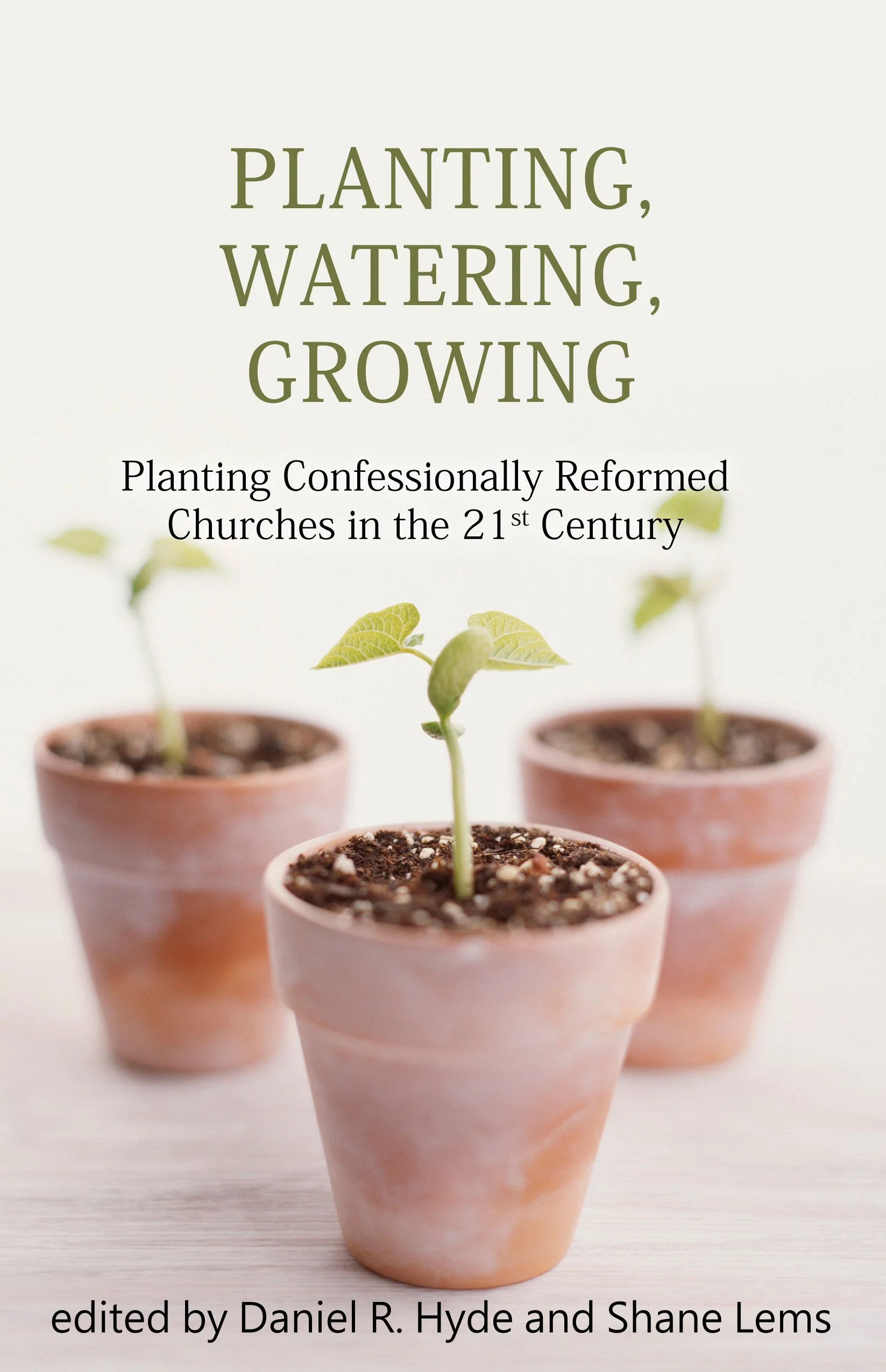
For more on church planting, see my co-edited book on my Books page
On Pastoral Ministry, see:
For citations, excerpts, translations, etc. of this academic journal article, see Permissions.
To attribute: Daniel R. Hyde, “On Being a Church Planter.” Mid-America Journal of Theology 20 (2009): 159–75.
The Principle and Practice of Preaching in the Heidelberg Catechism
Why is preaching so central to Reformed worship? This article reads the Heidelberg Catechism’s teaching on preaching as being the Holy Spirit's medicine, prescribing guilt, grace, and gratitude for the believer.
Puritan Reformed Journal 1:1 (January 2009): 97–117
Why is preaching so central to Reformed worship? This article reads the Heidelberg Catechism’s teaching on preaching as being the Holy Spirit's medicine, prescribing guilt, grace, and gratitude for the believer.
Why do Reformed churches give such prominence to preaching? Why are sermons not just short reflections, but extended expositions of God’s Word? This article explores the principle and practice of preaching through the lens of the Heidelberg Catechism.
With clarity and depth, it shows how like the ancient church, the Catechism places preaching at the very center of Christian worship and life, as the chief means by which God justifies and sanctifies His people. Tracing its threefold structure of guilt, grace, and gratitude, it demonstrates how preaching functions as spiritual medicine: diagnosing sin with the law, prescribing the gospel of Christ, and guiding believers in grateful obedience.
Drawing from the writings of Ursinus, Olevianus, and Bastingius, as well as the Palatinate Church Order, it explains how the Reformed tradition viewed preaching as the Spirit’s primary instrument to create faith, build up the church, and open the very gates of the kingdom of heaven.
On the Heidelberg Catechism, see:
For citations, excerpts, translations, etc. of this academic journal article, see Permissions.
To attribute: Daniel R. Hyde, “The Principle and Practice of Preaching in the Heidelberg Catechism.” Puritan Reformed Journal 1:1 (January 2009): 97–117.
Handling a High Mystery: The Westminster Confession on Preaching Predestination
How should a pastor preach predestination? This article explores the seventeenth-century Westminster Assembly divines' pastoral handling of this doctrine that was meant to give God’s people humility and comfort.
Puritan Reformed Journal 2:2 (June 2010): 235–58
How should a pastor preach predestination? This article explores the Westminster Assembly divines' pastoral handling of a doctrine meant to give humility and comfort.
Predestination has long stirred debate, confusion, and even fear within the church.
This article explores how the Westminster divines treated this “high mystery” in their Confession of Faith, offering guidance for preachers and comfort for believers.
Blending history, biblical insight, and pastoral wisdom, it traces the doctrine’s treatment from Augustine through the Reformation and Synod of Dort to the Westminster Assembly, showing how it has been taught for the glory of God and the assurance of His people.
Readers will discover how predestination, far from being a cold abstraction, is meant to inspire humility, strengthen holiness, and provide deep consolation in Christ.
For pastors, students of theology, and thoughtful Christians, this article uncovers the rich, practical, and doxological heart of a doctrine often misunderstood yet vital to the Christian.
For citations, excerpts, translations, etc. of this academic journal article, see Permissions.
To attribute: Daniel R. Hyde, “Handling a High Mystery: The Westminster Confession on Preaching Predestination.” Puritan Reformed Journal 2:2 (June 2010): 235–58.
A Catechism on Catechetical Preaching
Dr. Daniel R. Hyde’s outline of instruction for his pastoral interns at Oceanside United Reformed Church, on the age-old practice of “catechetical” or doctrinal preaching especially through the Heidelberg Catechism in the Dutch Reformed tradition.
Following up on my “A Catechism on Pastoral Theology,” I’d like to present this catechism on catechetical preaching. This forms the outline of a course of instruction I give my pastoral interns at Oceanside United Reformed Church. Perhaps someday I’ll teach it more formally. As with my last post, this reflects on my understanding and application over the course of my pastoral ministry since 2000 of the age-old practice of “catechetical” or doctrinal preaching especially through the Heidelberg Catechism in the Dutch Reformed tradition.
Q1: What is catechetical preaching?
In a broad sense, all preaching is catechetical preaching because every sermon catechizes or communicates an understanding of the Faith, bearing witness to what the preacher and/or church believes to its hearers.
In a narrow sense, catechetical preaching is that form of preaching that communicates the substance of the Christian Faith.
Q2: Is catechetical preaching actually preaching?
Yes.
As preaching, catechetical preaching belongs to the genus of preaching.
As catechesis, catechetical preaching is a particular species of preaching alongside lectio continua, festal, and occasional preaching.
Q3: Why is catechetical preaching necessary?
First, it is necessary for the preservation of the whole counsel of God against enemies within and without the church (Acts 20:18–30).
Second, it is necessary for the propagation of our faith to believers and unbelievers.
Q4: Has the holy catholic church practiced catechetical preaching?
Yes.
The Jewish practice of catechesis included the Shema, law (Ex. 20), prayer (18 benedictions), feasts, and sacrifices.
The New Testament practice is rooted in Matthew 28. The imperative “make disciples” (μαθητεύσατε) is explained with three participles: “go” (πορευθέντες; aorist passive) “baptizing” (βαπτίζοντες; present active), and “teaching” (διδάσκοντες; present active). This teaching is “all that I have commanded,” not merely the gospel. The goal is not mere conversion but maturity in Christ (Col. 1:28).
The rabbis’ fourfold catechesis continued into the Ancient Church’s catechesis using the basic building blocks of Creed, Commandments, Lord’s Prayer, and Sacraments.
The Medieval period began to recover this ancient practice so that priests understood the content of Christian doctrine in order to instruct the people in the knowledge of the Creed and the Lord’s Prayer.
The Protestant practice began with the Lutherans and spread, for example, to the Netherlands among the Reformed. By the time of the Synod of Dort (1618–19), catechism preaching was not seen as merely “a Dutch thing” as the foreign delegates evidenced that all Reformed churches engaged in catechetical preaching.
Q5: Am I to preach catechetical sermons?
Yes! The URCNA Church Order follows the Synod of Dort and the universal Christian practice, saying, “At one of the services each Lord’s Day, the minister shall ordinarily preach the Word as summarized in the Three Forms of Unity, with special attention given to the Heidelberg Catechism by treating its Lord’s Days in sequence.” (art. 40)
Q6: How should I preach catechism sermons?
Catechetical preaching must be Scripturally-saturated
It is preaching the Word. It’s supposed to bring the full counsel of God to our people on a given topic. The true mark of catechetical preaching is that it gets us into the Word so that we can get the Word into us. People shouldn’t know their Catechism better than the Word! A catechism sermon is not “on” or “about” the Catechism as though the Catechism is the text for the sermon on the same level as the inspired Word. This would contradict our very Confessions (see Belgic Confession, art. 7).
Catechetical preaching must be Christ-centered
Just as we seek to preach Christ from all of Scripture in our morning sermons, we need to do so in catechetical preaching. Don’t forget to relate whatever topic you’re preaching to Jesus and some aspect of his work for his people. I think this is one of the missing marks in modern catechetical preaching. The assumption is “preach the Catechism year in and year out.” It becomes a drudgery in part because it’s not Christological. Preach “Guilt, Grace, and Gratitude” in view of Jesus Christ and to the praise of Jesus Christ!
Catechetical preaching must be personal and practical
Another missing mark is turning the Catechism sermon into a lecture. There are so many great expositions of the Catechism that we can be led to think our job is to be a systematic theologian in the pulpit. Because of this people think catechism preaching is boring and impractical. The doctrines are preached but they are separated from real life. The remedy isn’t to stop preaching catechetical sermons, but to do so well. As with all preaching, we need to apply what we’re saying personally and practically as the Catechism itself does: “That I, with body and soul both in life and in death and not my own;” “the greatness of my sin and misery, how I am redeemed, and how I am to be thankful.” If you miss this, you miss one of the points of catechism sermons.
Catechetical preaching must be understandable
John Calvin’s methodology for commentaries is applicable to these sermons. They must have “lucid brevity and usefulness” (perspicua brevitas et facilitas). I know there are many interesting background debates and theological implications of our Catechism, but we need to focus on preaching the doctrines and exhortations of the Word in a way that our people can understand and apply. We must not focus on the proverbial, “How many angels can dance on the head of a pin” kind of questions! This is not an academic lecture! Don’t preach abstractly but concretely, pastorally, and simply so that even children can understand.
Catechetical preaching must be succinct
Calvin’s “lucid brevity” (perspicua brevitas) should also help guide us. One of the age-old difficulties of the second service is getting people to show up. Another issue I’ve heard and seen in our circles is that it’s hard enough to come back for the evening service, but doubly so when the preacher goes 45 minutes—again! Be succinct! Don’t feel you need to say everything about everything! I aim for 25 minutes max. We use the evening service to focus on prayer and Psalm-singing so that it’s not such a burden.
Catechetical preaching must be varied
Finally, let me encourage you to vary how you preach catechetical sermons. I know it was a mark of the Arminians to preach Scripture in the second service while a mark of the orthodox to read and preach the Catechism, but our task is not to repristinate the past. Speaking from a Southern California context, that was then, this is now. We need to preach our doctrines more creatively.
Preach the Catechism (or the Confession and Canons) as mini-series chunks of material. For example, “Believing the Gospel” (Apostles’ Creed), “The Life of Gratitude” (Ten Commandments), “How to Pray” (Lord’s Prayer). Plan your preaching calendar out to give a little time off in-between for occasional/seasonal sermons or some Psalms, for example.
Slow down and preach more sermons on a particular question/theme that comes up. For example, years ago I did a 50-part series rooted in Q&A 19, tracing the Gospel redemptive-historically from Genesis through Malachi, concluding with John 1. On Q&A 32 I’ve done a series on fighting the Devil in 10 sermons. This helps with another objection: catechism preaching is repetitive.
Lately, I’ve been attempting to give a brief exposition of one key text and then reading responsively the Q&As, giving a brief explanation of the doctrinal, apologetical, and practical aspects.
Q7: Should we ever move beyond catechetical preaching?
No. The words of Martin Luther should become close to our hearts the older we get:
even I must become a child; and early each day I recite aloud to myself the Lord’s Prayer, the Ten Commandments, the Creed, and whatever lovely psalms and verses I may choose, just as we teach and train children to do. Besides, I must deal with Scripture and fight with the devil every day. I dare not say in my heart: ‘The Lord’s Prayer is worn out; you know the Ten Commandments; you can recite the Creed.’ I study them daily and remain a pupil of the Catechism…Many regard the catechism as a simple, trifling teaching, which they can absorb and master at one reading and then toss the book into a corner…I must still read and study the catechism daily, and yet I cannot master it as I wish, but must remain a child and pupil of the catechism.
© 2025 Daniel R. Hyde. Permission is granted to reprint this article in full, unaltered, for non-commercial use, provided the attribution below is included and links to the original. For excerpts, translations, or commercial use, see Permissions.
To attribute: Daniel R. Hyde, "A Catechism on Catechetical Preaching," https://www.danielrhyde.com/articles/a-catechism-on-catechetical-preaching. Used by permission.
A Catechism on Pastoral Theology
Dr. Daniel R. Hyde’s brief catechism, or, instruction using questions and answers, on pastoral theology, reflecting on the understanding and application of the Word of God in pastoral ministry since 2000.
See also my related article, “A Catechism on Catechetical Preaching.”
Introduction
1. What is pastoral theology?
The study of the office, calling, equipping, character, and duties of the pastor.
The Office of the Pastor
2. What is “office?”
A distinct and official function.
3. What offices are there?
The general office of believer and various special offices.
4. What special offices were there in the Old Testament?
Prophet, priest, and king.
5. What special offices are there in the New Testament?
Apostles, prophets, evangelists, pastors, and teachers. (e.g., Eph. 4)
The Calling of the Pastor
6. How is a pastor called?
Through the internal calling of the Holy Spirit and the external calling of the church. (e.g., Acts 13)
The Equipping of the Pastor
7. How is the pastor equipped for this office?
By the anointing of the Holy Spirit.
8. In what ways does the Spirit anoint the pastor?
In illuminating his mind to know the truth of God, moving his will to obey the will of God, touching his heart to experience the love of God, and opening his mouth to proclaim the gospel of God.
The Character of the Pastor
9. What is the character of the pastor to be?
Example of faith and of godliness. (e.g., Heb. 13:7)
The Duties of the Pastor
10. What are the duties of a pastor?
The ministry of the Word and prayer. (e.g., Acts 6:4)
11. In what ways is the Word administered publicly?
Through preaching and through sacraments, which are visible appendices to the preached Word. (e.g., Matt. 28:19–20)
Preaching
12. How is the pastor to fulfill his ministry of the Word?
In preparation and administration.
13. How is the pastor to prepare for the ministry of the Word?
By diligent and prayerful study of the Word. (e.g., Ezra 7:10)
14. How is the pastor to administer the ministry of the Word?
Both publicly and privately. (e.g., Acs 20:20)
15. How is the ministry of the Word exercised publicly?
In the public reading and preaching of the Word. (e.g., 1 Tim. 4:13)
16. When is the Word to be preached?
At all times, in season and out of season. (e.g., 2 Tim. 4:2)
17. How is the ministry of the Word exercised privately?
In visiting people according to their needs.
18. What are some of these needs?
Family visitation, hospital visits, spiritual counsel, and evangelism.
Sacraments
19. When should baptism be administered?
As soon as feasible.
20. When should the Lord’s Supper be administered?
Frequently.
Prayer
21. How is the pastor to exercise his ministry of prayer?
Both publicly and privately.
22. What is public prayer?
The minister acting as the voice of the congregation before the Lord.
23. What use are forms of prayer?
As examples and helps, but not as required prayers.
Conclusion
24. What is the goal (τέλος) of pastoral theology?
The glory of God, edification of the saints, and the salvation of sinners.
© 2025 Daniel R. Hyde. Permission is granted to reprint this article in full, unaltered, for non-commercial use, provided the attribution below is included and links to the original. For excerpts, translations, or commercial use, see Permissions.
To attribute: Daniel R. Hyde, "A Catechism on Pastoral Theology," https://www.danielrhyde.com/articles/a-catechism-on-pastoral-theology. Used by permission.