Articles by Daniel R. Hyde
Some of these articles first appeared in peer-reviewed academic journals and scholarly venues written for colleagues in the academic guild and the ministerium—Calvin Theological Journal, Puritan Reformed Journal, Mid-America Journal of Theology, and The Confessional Presbyterian. Some are more popular pieces written for church members that read carefully. For a full list, see my Curriculum Vitae.
They explore the history and practice of Reformed liturgy (including the neglected place of absolution), the theology of the Heidelberg Catechism and the broader Three Forms of Unity, the task of preaching, and disputed questions in Reformed history and catholicity.
The journal articles date from 2006 to 2017, written across two decades of pastoral ministry and doctoral work at the Vrije Universiteit Amsterdam.
Each article is available in full text, as a PDF, or both.
Lost Keys: The Absolution in Reformed Liturgy
Why did the absolution disappear from Reformed worship in the modern era? A study of its use by John Calvin and Martin Bucer, and a positive case for restoring this use of the keys of the kingdom to contemporary Reformed liturgical practice.
Calvin Theological Journal 46:1 (April 2011): 140–66.
Calvin Theological Journal 46:1 (April 2011): 140–66
Why did the absolution disappear from Reformed worship in the modern era? This is a study of its use by Reformed churches such as the liturgy of Geneva with John Calvin and the liturgy of Strasbourg with Martin Bucer, and the case for restoring this use of the keys of the kingdom in contemporary practice.
This article uncovers the historical significance of public absolution in sixteenth-century Reformed worship, where reformers like John Calvin and Martin Bucer declared forgiveness as a vital exercise of the “keys of the kingdom.”
Tracing its decline within the Dutch Reformed tradition after the 1581 Synod of Middelburg, and its failed revival in the early twentieth-century Christian Reformed Church due to fears of Roman Catholic influence, the article argues for its restoration to Reformed liturgical life today.
It emphasizes the role of absolution in proclaiming the gospel, assuring believers of God’s mercy, and fostering spiritual joy, presenting it as a ministerial act grounded in Christ’s authority, rather than a priestly ritual.
This study calls for reclaiming this “lost key” to enrich contemporary Reformed worship.
For citations, excerpts, translations, etc. of this academic journal article, see Permissions.
To attribute: Daniel R. Hyde, “Lost Keys: The Absolution in Reformed Liturgy.” Calvin Theological Journal 46:1 (April 2011): 140–66.
According to the Custom of the Ancient Church? Examining the Roots of John Calvin’s Liturgy
John Calvin claimed the Genevan liturgy restored ancient practice. Daniel R. Hyde tests that against the Didache, Justin Martyr, and Tertullian, and finds it holds.
Puritan Reformed Journal 1:2 (June 2009): 189–211.
Puritan Reformed Journal 1:2 (June 2009): 189–211
John Calvin claimed the Genevan liturgy restored ancient practice. This article tests that against the Didache, Justin Martyr, and Tertullian, and finds it holds.
This article argues that John Calvin’s claim that his Form of Church Prayers reflected the practices of the early church was historically accurate.
It places Calvin’s liturgy in the broader Reformation effort to return the church to its patristic roots rather than innovate, showing how figures like Bucer, Bullinger, and Vermigli similarly argued that Protestantism was a restoration, not a departure, from the ancient faith.
It also surveys Calvin’s writings (e.g., Reply to Sadoleto and Necessity of Reforming the Church), where Calvin defended Reformation worship and doctrine as aligned with the church fathers and Scripture.
It then compares Calvin’s Geneva and Strasbourg liturgies to the earliest Christian liturgies described by Pliny, the Didache, Justin Martyr, and Tertullian, highlighting shared features like confession, psalm-singing, Scripture reading, preaching, prayers, and the Lord’s Supper.
The conclusion is that Calvin’s simple, Word-and-Sacrament–centered liturgy successfully embodied the “custom of the ancient church.”
On Liturgy and Worship, see:
For citations, excerpts, translations, etc. of this academic journal article, see Permissions.
To attribute: Daniel R. Hyde, “According to the Custom of the Ancient Church? Examining the Roots of John Calvin’s Liturgy.” Puritan Reformed Journal 1:2 (June 2009): 189–211.
Why I Love the Canons of Dort
TULIP is a nineteenth-century American invention; a Dutchman would have said “tulp” in the seventeenth century. Daniel R. Hyde on what the Canons of Dort actually say about grace.
TULIP is a nineteenth-century American invention; a Dutchman would have said “tulp.” On what the Canons of Dort actually say about grace.
I don’t remember the precise moment I encountered the Canons of Dort. What I do remember is it was while in college in my dorm’s computer lab. More importantly, I remember instantly falling in love with the Canons as I discovered the roots of my faith and of the holy catholic church. As my mind was enlightened with truth, my heart was enlivened with awe, humility, and praise to the Triune God who saved me by his grace.
As a pastor I’ve taken many notes on the beloved Canons, read anything I could find on them, taught them to inquirers in my congregation, to my church family in Sunday school settings, and even used them as guides for preaching the doctrines of the Word (see my article “A Catechism on Catechetical Preaching”). Years ago I published a commentary on the Belgic Confession of Faith entitled, With Heart and Mouth. Back in 2019, as the four hundredth anniversary of this 1618–19 Synod (a gathering of church and political leaders from across Europe in the Dutch town of Dordrecht) was around the corner, I wanted to put something together on the Canons. I’m grateful to The Davenant Press for partnering with me in bringing Grace Worth Fighting For to print.
In this article, let me give you several reasons why I love the Canons of Dort.
God’s Grace to Sinners
First and foremost, I love the Canons of Dort because they express God’s grace to sinners. When you read them for yourself, you’ll see that they do not merely describe from afar static doctrines; they profess God’s personal grace to personal sinners. One of the reasons I wrote Grace Worth Fighting For is because of how prevalent these caricatures and misperceptions of “Calvinism” are in evangelical Christian circles. I cannot tell you how often I get asked by visitors to our congregation or by members trying to explain to their friends, what is “predestination” all about? I like to encourage them to take a step back and talk about the God of predestination so that it’s personal. As you read the Canons, you’ll see that, contrary to populist opinion, “double predestination” (which itself needs to be carefully defined) is not behind every corner, controlling every other doctrine. You’ll see that predestination is not a central dogma to the Reformed theological system; it’s there, but only because God reveals it as an expression of his grace.
Applying Catholic Theology
Second, I love the Canons of Dort because they express and apply catholic theology to a particular controversy. In other words, if you come to the Canons having just read your daily devotional of Boettner, Hoeksema, Sproul, or Steele & Thomas hoping for confirmation of these exponents of “the Reformed view” of one of the petals on the TULIP, you’re in for a few surprises.
Do you think that the Reformed made a clean break with medieval versions of election and reprobation? Think again.
Do you think “Christ died for the elect, period,” is the Reformed view of so-called “limited atonement?” Keep reading.
What about the Canons’ article on “irresistible grace?” The Reformed at the time of Dort abhorred that word “irresistible.”
“Once saved, always saved” is the Reformed view on perseverance, right? Like I said; surprises abound.
This is one of the areas I’ve grown in over the years as I’ve read, studied, and taught through the so-called “doctrines of grace.” It seems human nature gravitates to extremes, as we’ve experienced in our national political discourse; sadly we do the same in our theology. The Canons, as the definition of various aspects of God’s grace, ironically lay out a “catholic” (not Roman, but universal Christian) and consensus view and not fire-breathing, cage-phase Calvinism.
Realistic View of the Christian Life
Third, I love the Canons of Dort because they express a realistic view of human nature and of the Christian life. Like I said above, the Canons are no mere 35,000-foot view of philosophical Calvinism; they’re all about a personal God’s grace to persons. What you’ll see as you read through them is that real men wrote them. These were men who were professors of young, immature students; men who pastored in rural, lowly educated parishes; men who pastored in cities where the slogan could very well have been, “What happens in Dordrecht, stays in Dordrecht.” The Canons are full of pastoral insight: there are all kinds of people who respond in all kinds of ways to God’s grace in Jesus Christ. Even within the community of Christians, there are strong believers, there are weak believers, there are those prone to stumble and fall, and everything in between. Because of our variegated human experience of sin and grace, pastors are not to deal with everyone in precisely the same way. This theme comes up again and again in the Canons’ discussion of assurance of faith.
More than TULIP
Fourth, I love the Canons of Dort because they express so much more than TULIP. “Don’t you believe in the TULIP thing?” That’s one of the common things I hear when I tell people I’m a Reformed pastor. TULIP is the acronym for Total depravity, Unconditional election, Limited atonement, Irresistible grace, and Perseverance (or Preservation) of the saints. It’s supposedly what the Synod of Dort decided on contra the Arminians. Yet, this is a nineteenth-century American over-simplification, actually re-orders the order of the Canons, and would’ve been an impossible acronym for a seventeenth-century Dutchman since his word for “tulip” would have been tulp.
As I’ve said, the Canons of Dort are about God’s grace, not detached and distant doctrines. And even when they discuss those doctrines as aspects of God’s amazing grace, they do so in well-rounded biblical ways, mindful of the catholic Christian past, and with plenty of practical application throughout. For example, if you read a modern introduction to TULIP you’re more than likely not going to read anything about the practical problem predestination poses to the Christian mom and dad whose infant daughter or son has just died. But the Canons do!
Conclusion
I love the Canons of Dort. I love them for proclaiming who God is: gracious. I love them for being catholic and not insular. I love them for being expressions of real men to me, a really sinful man. I love them because they don’t give me just five petals from a tulip flower; they take me to the roots of those petals.
I encourage you to take up and read the Canons of Dort and be enraptured in the love (even again) of the God they proclaim.
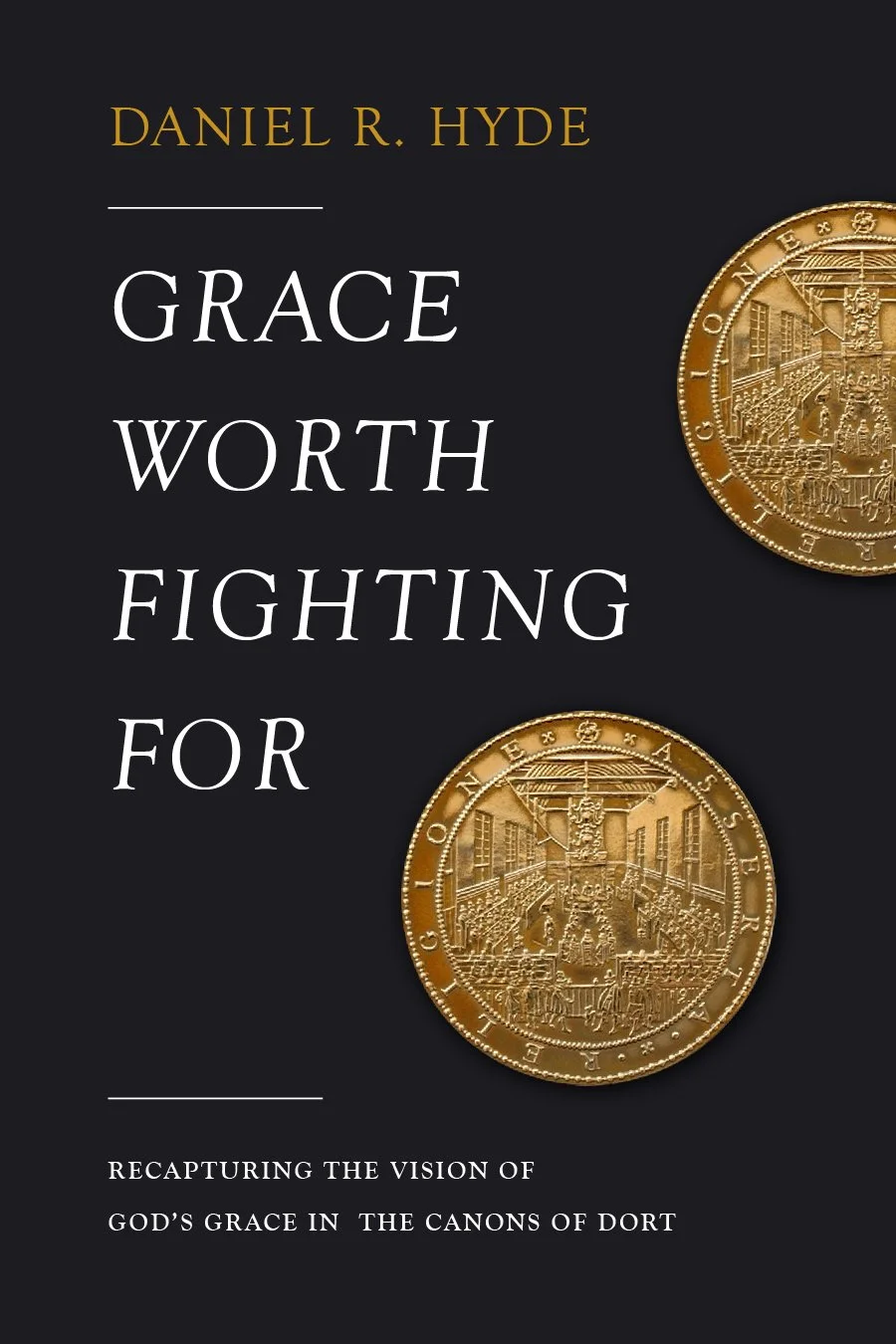
See the page dedicated to my historical, theological, and practical commentary on the Canons of Dort for its 400th anniversary.
More in this series:
On the Canons of the Synod of Dort, see:
© 2025 Daniel R. Hyde. Permission is granted to reprint this article in full, unaltered, for non-commercial use, provided the attribution below is included and links to the original. For excerpts, translations, or commercial use, see Permissions.
To attribute: Daniel R. Hyde, "Why I Love the Canons of Dort," https://www.danielrhyde.com/articles/why-i-love-the-canons-of-dort. Used by permission.
Why I Love the Heidelberg Catechism
A disillusioned 19-year-old Pentecostal found a 400-year-old catechism in a Christian used bookstore. Daniel R. Hyde on the Heidelberg's history and theme of comfort.
A disillusioned 19-year-old Pentecostal found a 400-year-old catechism in a used bookstore. On the Heidelberg's history and theme of comfort.
Hey fellow sinners! How do you know you are SAVED? Why do you believe what you SAY you believe? Tragically many Christians…do not have a clue as to WHY they believe it from the Holy Scriptures…If you will study this inspiring little volume in one hand with your Bible in the other, you will know why you believe what you say you believe…I commend this historic volume to you knowing the body of Christ will be stronger and better equipped to build the Kingdom together!
I had been a Christian all of two years. I was disillusioned by my Pentecostal experience. Then I heard the Heidelberg Catechism mentioned on the White Horse Inn radio show and I had to find a copy. I checked the college bookstore; no luck (unsurprisingly!). I went to Calvary Chapel Costa Mesa’s bookstore; no way Jose! Then I found a Christian bookstore with a large used section. I wandered around, scanned dozens upon dozens of shelves. Eureka!
I was a 19-year old, disillusioned, Pentecostal college student searching out a 400-year old catechism. I opened it, read the above Foreward, and noticed the words came from Paul Crouch of the Trinity Broadcasting Network! This couldn’t be right. A Word of Faith preacher recommending the catechism I heard on the White Horse Inn? Amazingly, it’s true.
I still have that little paperback on my shelf to remind me “I once was lost, but now am found.” I want to invite you to take up this Heidelberg Catechism so that you’ll discover its joys and treasures for yourself.
Highlights of the Heidelberg: The Who, What, When, Where, & Why
When
The Heidelberg Catechism was published January 19, 1563. That was only 90 years since the final fall of the Roman Empire at Constantinople to the Ottoman Turks, 46 years since Martin Luther nailed his Ninety-Five Theses, and just 1 month since the Council of Trent ended.
Where
It was written and published in Heidelberg, the capital city of the Palatinate. This was a German-speaking region within the Holy Roman Empire with ancient roots dating back to the 6th century during the time of the Frankish King, Childebert I.
By 1546 Protestantism was the religion of the realm. Yet Charles V, Holy Roman Emperor, crushed the Protestants in 1547 at the Battle of Mühlberg, and the Augsburg Interim re-introduced Roman Catholicism. The 1555 Peace of Augsburg granted secular princes the right to determine their realms’ religion between Lutheranism and Catholicism. In 1556 Otto Heinrich began to reign as an enthusiastic Lutheran. Yet by adding professors of various theological stripes to Heidelberg University, he caused factions between strict Lutherans, Melanchthonian Lutherans, and Zurich-minded Reformed men. Otto’s successor, Frederick III, sponsored a Disputation from June 3–7, 1560 on the mode of Christ’s presence at the Lord’s Supper leading to him supporting the Reformed cause.
What
A “catechism” is not a Roman Catholic thing but a small “c” catholic thing, meaning, an ancient Christian thing. The roots of catechisms come from Old Testament creeds and confessions like the Shema (Deut. 6:4) and the New Testament’s “Christ is Lord!” “Catechism” comes from the Greek verb κατηχέω, which is a compound word from κατα, “down,” and ηχέω, “sound;” thus meaning, “I sound down” (Luke 1:4; Acts 18:25; 21:2, 24; Rom. 2:18; 1 Cor. 14:19; Gal. 6:6). Catechism is teaching by using questions and expecting an answer. The early Church needed a basic way to guide new converts and members into knowledge of what they believed. They had to be “catechized.” The basic outline was the Apostles’ Creed, the Sacraments, the Lord’s Prayer, and the Ten Commandments.
Who
Its “father” was Elector Frederick III. He is said to have read over it several times when in draft form to compare it with the Word. When he was called to defend it before the Imperial Diet of Augsburg against the charge that it was written by Heinrich Bullinger, he said he could show in his own handwriting how he improved it in several places!
When published, Frederick appended a letter which claimed it was written “with the advice and cooperation of our entire theological faculty…and of all Superintendents and distinguished servants (or, ministers) of the Church.” Since the Palatinate had come into the Reformation with several factions and viewpoints within its ministers and faculty, anonymity and collective authorship stressed the unity of the Elector’s reformation between Calvinist, Zwinglian, and Philippist influences.
Why
Frederick’s appended letter described the problem being that the youth of his principality were “disposed to be careless in respect to Christian doctrine, both in the schools and churches.” Some weren’t instructed at all while others were instructed in an unsystematic way without a clear catechism. The Catechism was the remedy. It was intended to do three things: 1) provide a “fixed form and model” of Christian doctrine for his realm; 2) instruct the youth of the Palatinate in school and church; and 3) enable the pastors and schoolteachers of the Palatinate to preach/teach. Thus, the Catechism was written for the preachers, people, and pupils of the Palatinate. We can see this in its 129 questions and answers, which were organized into 52 Lord’s Days (zondag). It was also required to be read aloud every Sunday in every congregation in just 9 readings (lectiones).
The Theme of the Heidelberg: Living and Dying in Comfort
Let’s focus on the Heidelberg Catechism’s two opening programmatic questions and answers, Q&A 1 introduces the theme of the Catechism: Living and Dying in Comfort. Here’s Q&A 1:
What is your only comfort in life and in death?
That I am not my own, but belong—body and soul, in life and in death—to my faithful Savior, Jesus Christ. He has fully paid for all my sins with his precious blood, and has delivered me from the tyranny of the devil. He also watches over me in such a way that not a hair can fall from my head without the will of my Father in heaven; in fact, all things must work together for my salvation. Because I belong to him, Christ, by his Holy Spirit, also assures me of eternal life and makes me wholeheartedly willing and ready from now on to live for him.
What is “Comfort?”
Don’t impute an image of feeling “comfy” or being “comfortable” when you hear comfort (trost/troost, German/Dutch; consolatio, Latin). One of its main authors was Zacharius Ursinus (1534–83), who wrote, “Comfort is that which results from a certain process of reasoning, in which we oppose something good to something evil, that by a proper consideration of this good, we may mitigate our grief, and patiently endure the evil.”
When I compare and contrast the good of Jesus Christ’s grace with the evil of my sins, I experience trost, consolatio, comfort; I experience certainty. Ursinus explained that comfort is “the assurance and confident expectation” that we will have a “full and perfect enjoyment” of our salvation “in the life to come, with a beginning and foretaste of it already, in this life.” Comfort speaks of the assurance that I ultimately will be in the presence of God.
Having comfort is so urgent and vital. Sudden and tragic deaths remind the world that life under the sun is fallen, fragile, fleeting, and feels futile. We’re all going to die. In the words of Solomon, whether you’re righteous or wicked, good or evil, clean or unclean, make a sacrifice to God or not: “as the good one is, so is the sinner…the same event happens to all” (Ecc. 9:2, 3).
Personal Comfort
What is your only comfort…That I am not my own. This isn’t some frozen or static question. It’s personal; it’s passionate! Whenever you read question 1, you’re confronted with recommitting yourself to the Triune God. This isn’t merely a head-knowledge kind of question and answer either. Heidelberg teaches that our subjective comfort is rooted in and produced by what is objectively good. Comfort is Christological. Heidelberg begins with who we are in Christ.
The Christ of our Comfort
After we say what our only comfort is, we go on to express why Jesus is our only comfort: that I am not my own, but belong…to my faithful Savior, Jesus Christ. “For none of us lives to himself, and none of us dies to himself. For if we live, we live to the Lord, and if we die, we die to the Lord. So then, whether we live or whether we die, we are the Lord’s” (Rom. 14:7–8); I belong to Jesus Christ; he’s the key to comfort. Belonging to Christ is “uniquely Christian comfort” because it’s
…a comfort consisting in the assurance of the free remission of sin, and of reconciliation with God, by and on account of Christ, and a certain expectation of eternal life, impressed upon the heart by the holy Spirit through the gospel, so that we have no doubt but that we are the property of Christ, and are beloved of God for his sake, and saved forever.
What’s Christ done to make us his own? The answer goes on to list theological descriptions of what Jesus did; these aren’t merely theological words, but responses to the devil’s accusations.
First, he has fully paid for all my sins with his precious blood. To say fully paid (plenissime satisfaciens) is a direct apologetic against Rome’s insistence on continual satisfaction. The debt I owe to God for all my sins (pro omnibus peccatis) has been paid in full by Jesus. How? With his “precious blood” and “not with perishable…silver and gold” (1 Peter 1:18, 19 cf. Heb. 1:3; 2:17; 5:9; 9:12, 26).
Second, he has delivered (liberavit) me from the tyranny of the devil. Because of Adam’s original sin and our actual sins, practically, we belonged to the devil. Jesus said, “Truly, truly…everyone who commits sin is a slave of sin” (John 8:34). Since the devil’s temptation and instigation led to Adam’s sin that led to death, Jesus died then rose again to crush the devil’s power! He entered the strong man’s house (Satan) to plunder his goods (us) by binding him! (Matt. 12:29; Mark 3:27).
Third, he also watches over me in such a way that not a hair can fall from my head without the will of my Father in heaven; in fact, all things must work together for my salvation. Jesus not only purchased salvation for us, he preserves us in it. Ursinus said, “Our safety does not lie in our own hands, or strength; for if it did, we should lose it a thousand times every moment.” Jesus said, “I give them eternal life, and they will never perish, and no one will snatch them out of my hand. My Father, who has given them to me, is greater than all, and no one is able to snatch them out of the Father’s hand. I and the Father are one” (John 10:28–30).
The Application of our Comfort
Now that I’m Christ’s, there are two practical aspects the Catechism brings up.
First, because I’m Christ’s by his Holy Spirit [he] also assures me of eternal life. Paul said that if we have the Spirit, we have Christ, because he’s “the Spirit of Christ” who “bears witness with our spirit that we are children of God” (Rom. 8:9, 16).
Second, because I’m Christ’s by His Holy Spirit, he makes me wholeheartedly willing and ready from now on to live for him. In Titus 2, Paul said Christ “gave himself for us” for two reasons: “to redeem us from all lawlessness” and “to purify for himself a people for his own possession” (Tit. 2:14).
Confidence in Life and Death
Q&A 2 continues the theme of comfort with an outline split into three big parts:
Q: How many things must you know to live and die in the joy of this comfort?
A: Three: first, how great my sin and misery are; second, how I am delivered from all my sins and misery; third, how I am to thank God for such deliverance.
Some say Q&A 1 is “the mountain peak” while Q&A 2 is “the valley.” But Q&A 2 speaks of enjoying (fruens) comfort and living and dying happily! We know it’s a joyful and happy thing to live in the confidence of belonging to Jesus. But note both Q&A 1–2 also say it’s a happy thing to die in the confidence of belonging to Jesus. From prison Paul wrote, “it is my eager expectation and hope that I will not be at all ashamed, but that with full courage now as always Christ will be honored in my body, whether by life or by death” (Phil. 1:20). Then comes the famous line: “For to me to live is Christ, and to die is gain” (Phil. 1:21). That’s joy!
The Depth of Misery
I must know how great my sin and misery are. Do you know that “those who are well have no need of a physician, but those who are sick…For I came not to call the righteous, but sinners” (Matt. 9:12, 13). Do you know how great your sins against God are and how miserable you’d be apart from his grace?
Note Paul’s oxymoronic statement in Ephesians 2:1–2: “And you were dead in the trespasses and sins in which you once walked.” We were like zombies—dead yet alive; alive physically, but inside empty and “dead.” Therefore, we lived our lives “following the course of this world, following the prince of the power of the air, the spirit that is now at work in the sons of disobedience” (Eph. 2:2). He writes as a Jew “among whom we all once lived in the passions of our flesh, carrying out the desires of the body and the mind, and were by nature children of wrath, like the rest of mankind” (Eph. 2:3). Did you hear that? We all “were by nature children of wrath.” Not only were we “dead” by actually committing “transgressions and sins” but we were also dead by originally committing transgression and sin in our father Adam (Rom. 5:12).
The Deliverance from Sin
I must know how I am delivered (liberer) from all my sins and misery. How am I delivered from original and actual sins? “But God!” (v. 4) These are the two simplest yet greatest words the world has ever heard! These two small words magnify the free grace of God toward us as sinners by contrasting what we deserved as “objects of wrath” with what God has given us, his grace.
Even when we were dead in our trespasses of God’s holy Law, “but God!” Even when we were dead in our sins, “but God!” Even when we walked according to the course of this world, “but God!” Even when we walked after the ways of the Devil, “but God!” Even when we fulfilled the desires of the flesh and mind, “but God!” Even when we were by nature children of wrath, “but God!” And “being rich in mercy” and “because of the great love with which he loved us even when we were dead in our trespasses” (v. 4) God “made us alive together with Christ—by grace you have been saved” (v. 5). We were dead; he made us alive! We were hollow zombies; he made us Spirit-filled images of God. We were six feet under the ground, he took us into his heavenly banquet room. We were in burial linens, he clothed us with pure white robes.
The Life of Gratitude
I must know how I am to thank God for such deliverance. This is what Paul said, when he asked, “Are we to continue in sin that grace may abound?” (Rom. 6:1) He answered, “Do not present your members to sin as instruments for unrighteousness, but present yourselves to God as those who have been brought from death to life, and your members to God as instruments for righteousness” (Rom. 6:13).
Look at Ephesians 2:10: “For we are his workmanship, created in Christ Jesus for good works, which God prepared beforehand, that we should walk in them.” That word “created” is used elsewhere to speak of the entire created realm (Rom. 1:20) but here Paul has our personal new creation in view. “Therefore, if anyone is in Christ, he is a new creation; the old has gone, the new has come!” (2 Cor. 5:17) Now you can “walk” in “good works” in contrast to walking in trespasses and sins, according to the world’s ways, in the devil’s footsteps as before. This is the life you are now able to live in the Spirit as God’s resurrected people.
Conclusion
Take up the Heidelberg Catechism and embrace your “comfort” of serving the Savior who gave himself for your sins.
Het troostboek van de kerk—“the church’s book of comfort.” That’s what Dutch Reformed Christians have called the Heidelberg Catechism for generations. It still is!
More in this series:
On the Heidelberg Catechism, see:
© 2025 Daniel R. Hyde. Permission is granted to reprint this article in full, unaltered, for non-commercial use, provided the attribution below is included and links to the original. For excerpts, translations, or commercial use, see Permissions.
To attribute: Daniel R. Hyde, "Why I Love the Heidelberg Catechism," https://www.danielrhyde.com/articles/why-i-love-the-heidelberg-catechism. Used by permission.
Why I Love the Belgic Confession
Guido de Brès died for it, yet it's the least known of the Three Forms of Unity. Daniel R. Hyde on the Belgic Confession's history, theology, and piety.
Guido de Brès died for it, yet it's the least known of the Three Forms of Unity. On the Belgic Confession's history, theology, and piety.
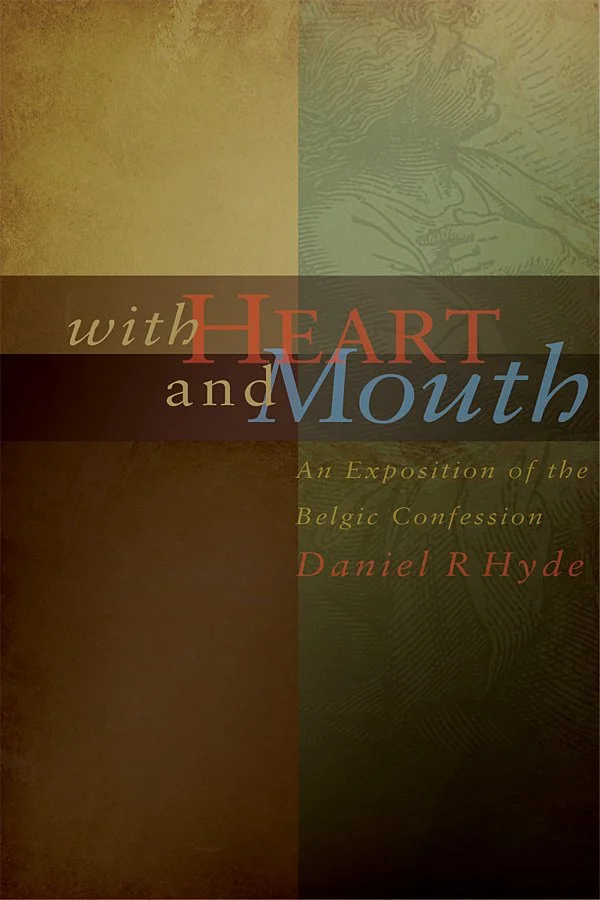
Sinclair Ferguson memorably wrote that of the three Persons of the holy Trinity, the Holy Spirit wasn’t the forgotten, but the unknown member of the Godhead. Similarly, among the Three Forms of Unity—the historic confessions of faith of (Dutch) Reformed churches—the Belgic Confession is certainly the most unknown. Those of us in Reformed churches are familiar with our beloved Heidelberg Catechism through regular catechetical preaching. Philip Schaff once described the Heidelberg as being “baptized with the pentecostal fire of the great Reformation” and being “the product of the heart as well as the head, full of faith and unction from above.” I remember the first time I read its opening question, “What is your only comfort in life and in death.” I felt like the new wine of Reformed truth was entering into me as a new wine skin. We’re familiar with the Canons of Dort—the capstone of our confessions and armament against Arminianism. This document gives expression to the “doctrines of grace” or so-called “five points of Calvinism” (see my commentary). I, too, recall reading the Canons for the first time and being struck by the precision of its doctrines of predestination, the sufficiency and efficiency of Christ’s satisfaction, the nature of sin, the power of the Holy Spirit in regeneration, and the preserving work of the Triune God. I was moved by how these doctrines led to devotion, precision led to piety, and exposition led to experience. Although unknown, though, I love the Belgic Confession. I even wrote a book on it. Let me offer three reasons why.
Celebrated for its History
The history of the Belgic Confession is why I love the Belgic Confession. Its history is the stuff of legend: a persecuted minority, a repressive regime (Spain), and heroic preachers. One of those preachers in the southern Low Countries (now Belgium) was Guido de Brès. The family business was making idols for Roman Catholics. Yet God heard his mother’s prayers, just as he heard those of Monica for Augustine. de Brès’ became a minister of the Gospel. His ministry was like Paul’s: “as dying, and, behold, we live” (2 Cor. 6:9). He preached in a town for a season, then entered exile in London, Geneva, and throughout the Low Countries. The Reformed churches came to believe the time was right to publicly confess their faith. They desired to show the Roman Catholic magistrate that their faith was apostolic and ancient. de Brès tossed a package containing this Confession over the wall of the magistrate leading to a manhunt that led to his death.
Why do I love this history? Very simply: it testifies that the doctrine we confess with our lips is worth the price of our lives. Will you love this confession by professing its truths before a dark and dying world or will you hide its light “under a bushel?” (Matt. 5:15)
Celebrated for its Theology
The theology of the Belgic Confession is why I love the Belgic Confession. It contains the “old paths” (Jer. 6:16) of the prophets and apostles, ancient church fathers and ecumenical councils. Reformed theology is truly Reformed Catholic (Christian) theology. Like the Apostles’ and Nicene Creeds it begins with God (art. 1) and ends with his eternal kingdom brought by the return of King Jesus (art. 37). It speaks of how we know God: “He makes Himself more clearly and fully known to us by His holy and divine Word” (art. 2). It speaks of the most blessed and all-glorious Triune God (art. 9). It speaks of his creation and providence (arts. 12–13), man’s heinous sin (arts. 14–15), God’s predestinating work a la ancient Augustinianism (art. 16), the person and work of the Son (arts. 17–26), and the existence and reality of a holy catholic church (arts. 27–36).
I’ve had so many inquirers come to our church over the past 20 years. They come after years of legalism in churches and pouring out their hearts to God for answers to life’s big questions. I remember one man to whom I gave a copy of the Belgic Confession, told him to read and then get back to me. His summary was, “I felt like it was Christianity 101 that I’ve always believed.” That was music to my ears. Why? The “Reformed faith” isn’t a cultic set of doctrines and rituals. It’s not a secret club for a few frozen chosen. Reformed Christianity is Christianity. Therefore it has the answer to sinners’ deepest longings and needs. How did this realization bring peace to the soul and experience of grace to the heart of this inquirer?
Celebrated for its Piety
The piety of the Belgic Confession is why I love the Belgic Confession. In the theology of the prophets, apostles, church fathers, and ancient creeds we find the deep-rooted piety our souls need. As Dorothy Sayers once wrote, “The Christian faith is the most exciting drama that ever staggered the imagination of man—and the dogma is the drama.” The heroic history and catholic theology of the churches under the cross (kerken onder het kruis) in the Low Countries was not dry, dusty, or dead orthodoxy. Its living faith that led to orthopraxy. Guido de Brès and the Reformed churches professed theology in a way that expressed praxis pietatis, the practice of piety. Let me give some examples:
Scripture
We don’t just confess the Scriptures are the inspired Word of God. They are because “God, from a special care which He has for us and our salvation, commanded his servants…to commit His revealed Word to writing” (art. 3). When you read the Word at home and hear the Word read in worship, do you realize that you are experiencing God’s special care for your soul?
Trinity
We don’t just confess the Trinity is true because of a list of Bible proof-texts. The Confession says our Christian experience is a testimony to the reality of the Trinity: “Moreover, we must observe the particular offices and operations of these three persons towards us. The Father is called our Creator by His power; the Son is our Savior and Redeemer by His blood; the Holy Ghost is our Sanctifier by His dwelling in our hearts” (art. 9; emphasis added). Although this sense may ebb and flow in this life, we “expect hereafter to enjoy the perfect knowledge and benefit thereof in heaven” (art. 9).
Sin
We don’t just confess the doctrine of original sin. We don’t just say baptism doesn’t wash it away (per Roman Catholicism). “By [God’s] grace and mercy [it’s] forgiven them.” Affirmation leads to action: “Not that they should rest securely in sin, but that a sense of this corruption should make believers often to sigh, desiring to be delivered from this body of death” (art. 15). Don’t despair because of your original sin, but desire deliverance from it!
Jesus
We don’t just confess the doctrine that Jesus is our Mediator at the right hand of God in the Apostles’ Creed: “He ascended into heaven, and sitteth at the right hand of God the Father Almighty.” This confession is of immense practical benefit for assurance.
Our Mediator “ought in no wise to affright us by His majesty or cause us to seek another according to our fancy,” as Roman Catholic theology implies with Jesus as Judge and the many saints and intercessors besides him (art. 26). Instead,
“there is no creature, either in heaven or on earth, who loveth us more than Jesus Christ…If, then, we should seek for another mediator who would be well affected towards us, whom could we find who loved us more than He who laid down His life for us, even when we were His enemies?…And who will sooner be heard than the own well-beloved Son of God?”
In our sinful hearts, though, we convince ourselves of the contrary: “But I’m too sinful, too unlovable, to unworthy.” Yet listen to this: “Let us not forsake Him to take another, or rather to seek after another, without ever being able to find Him”—and here’s my favorite line in all of the Confession—“for God well know, when He gave Him to us, that we were sinners” (art. 26). Doesn’t that want to cause you to sing?
Amazing love! How can it be?
That Thou, my God, shouldst die for me?
Conclusion
These are just a few of the gems of piety that flow from the doctrines contained in this historic Reformed Confession. This is why I love the Belgic Confession. I pray it becomes the same for you.
More in this series:
© 2025 Daniel R. Hyde. Permission is granted to reprint this article in full, unaltered, for non-commercial use, provided the attribution below is included and links to the original. For excerpts, translations, or commercial use, see Permissions.
To attribute: Daniel R. Hyde, "Why I Love the Belgic Confession," https://www.danielrhyde.com/articles/why-i-love-the-belgic-confession. Used by permission.
His Commandments Are Not Burdensome
Does 1 John 5:3 teach that Christ carried the law's burden for us? Daniel R. Hyde reads John Calvin and others on this verse and makes the case that this is the right doctrine, but the wrong text.
Does 1 John 5:3 teach that Christ carried the law's burden for us? This article reads Calvin and others on the verse and makes the case that this is the right doctrine, but the wrong text.
If someone looks at [God’s commands] in the wrong way and says that they are heavy to bear, he is merely revealing his own weakness.
—Andreas Presbyter, Catena on 1 John 5:3
Right Doctrine, Wrong Text
When I was in college, I was required to read G.K. Beale’s edited volume, The Right Doctrine from the Wrong Texts? Essays on the Use of the Old Testament in the New (Baker Books, 1994). That title has always stuck with me as a mantra for exegeting Scripture, preaching the Word, and writing books. You can preach and teach the right doctrine, but do so by stretching the language of the wrong text.
Tullian Tchividjian on 1 John 5:3
I don’t think it’s a stretch to say that Tullian Tchividjian stretched Scripture in such a way in his May 18, 2014 post “Unburdened.” This post first appeared at The Gospel Coalition, but since also his content was removed, it took me quite a while to find this old post on The Wayback Machine. He took as his text 1 John 5:3, “For this is the love of God, that we keep his commandments. And his commandments are not burdensome.” Tchividjian especially focused in on the latter half of the verse: “his commandments are not burdensome.”
After mentioning the 613 mitzvoth (“commandments”) of the Old Testament, the Sermon on the Mount, as well as our own pet laws we try to keep, Tchividjian wrote, “The idea that God’s commandments are not burdensome seems to diametrically oppose our experience: to us, they feel super burdensome.” All of have this experiential problem. He then juxtaposed this with Jesus’ promise of rest and a light burden in Matthew 11. Tchividjian put the problem this way: “How do the obviously burdensome commandments of life become not burdensome? How is it that Jesus’ yoke is easy when he is the one asking us to be perfect?” Here is how Tchividjian reconciled the conundrum:
The answer, though incredibly profound, is actually quite simple. Though the commandments are indeed burdensome, that burden has been laid on the shoulders of another. Jesus Christ, who demands that we be perfect, achieves perfection in our place. Jesus Christ, the culmination of the Old Testament story, fulfills the Old Testament laws. That same weight that threatens to break our backs actually did crush our savior.
God’s commandments are not burdensome because we do not carry them. The weights that we bear every day are simply aftershocks of our human attempts to save ourselves. The weights we feel are a phantom; they’ve already been taken to the cross, carried up the Via Dolorosa on Christ’s back. We are free. We are, in Christ, unburdened.
This is true today, and every day.
This is right doctrine, wrong text:
The right doctrine—Christ’s vicarious obedience and suffering justifies us from the burdensome curse of the law.
The wrong text—the newborn child of God’s has a newfound joy in sanctification.
1 John 5:3 in Context
Notice the context of 1 John 5:3. Robert S. Candlish (affiliate link) said verse 3 “is not an incidental remark merely; it is of the essence of the apostle’s argument.” What is that argument? Matthew Poole (affiliate link) summarized it as John teaching that those who believe in Jesus with a “lively, efficacious, unitive, soul-transforming, and obediential faith” have been born again or regenerated by God himself (v. 1). Because we have been made new in Christ we now love God and therefore love our fellow born again believers (v. 1)—“our true love to them supposes our love to him, and is to be evinced by it.” John then gives the evidence of this love for our brothers and sisters in Christ: love of God and obedience to his commands (v. 2). He then defines this divine-ward love of the child of God: “that we keep his commandments” (v. 3). Then the key phrase: “and his commandments are not burdensome” (v. 3). How can John say this? Not only because the “holy and righteous and good” (Rom. 7:12) law of God contrasted with the “heavy burdens, hard to bear” of the scribes and Pharisees (Matt. 23:4; Luke 11:46), but “because the new life imparted to members of the family of God carries with it a new desire to do His will and a new power to give effect to that desire.”
Here a question for us to consider is this: is there any hint in the text that John is describing the doctrine of the active and passive obedience of Jesus Christ to justify us? No, there is not. On Tchividjian’s reading, he turns a description of the child of God’s relationship to God’s commandments into a description of the active and passive of obedience of Christ. If this were true, the pericope should be read to say:
Everyone who believes that Jesus is the Christ has been born of God, and everyone whosince Jesus loves the Father he loves whoever has been born of him. By this we know that weJesus love[s] the children of God, whenbecause wehe love[d] God and obey[ed] his commandments. For this is the love of God, that wehe kept his commandments. And his commandments are not burdensome to us because Jesus took their burden.
Changing all the descriptions above from us to Jesus is silly, isn’t it? But in our hyper-sensitive Reformed world, some do this in order not to be branded a legalist, moralist, neo-nomian—or worse yet, “Puritan.” Because the doctrine sounds right, this sort of exegesis and homiletics passes as “rightly handling the word of truth” (2 Tim. 2:15).
Reveling in Christ’s Active and Passive Obedience
As a pastor of a congregation that is typically full of young Christians, newly Reformed evangelical Christians, along with many Westminster Seminary California interns, I know it is attractive to revel in the active and passive obedience for justification and forget all about the new birth, the Holy Spirit, and sanctification. I know it is attractive after hearing law and gospel so muddled in evangelical preaching that it was unpalatable to read every Scripture as either law merely in its pedagogical use or gospel. I know how powerful it is to hear that Christ has removed the curse of the law from me once for all; but Christ has done more. That “more” is often left out. “Christ” has also sent his Spirit into my heart and “is also renewing us by his Spirit into his image” (Heidelberg Catechism, Q&A 86). First, he rescued me; now he’s begun to renovate me from the inside out. Therefore, in the aforementioned post, Tchividjian does not offer a responsible reading of Scripture. He, and any who would interpret such a text similarly, offers a model of ministering the Word unlike the pattern of our forefathers.
John Calvin on 1 John 5:3
Let me encourage you—especially young seminarians—to read John Calvin’s exegetical comments on 1 John 5:3 in light of Tchividjian’s and ask yourself: who has the right doctrine and the right text? Calvin said John added the line in question “his commandments are not burdensome” because of how easy it is for our zeal in serving God to be dampened: “For some who have followed a godly and holy life with a cheerful mind and great enthusiasm, afterwards grow weary, finding their strength inadequate. Therefore, to stir up our efforts, John says that God’s commandments are not grievous.”
Calvin then dealt with the seeming contradiction or practical difficulty of the law being described as an unbearable yoke in one passage (Acts 15:2) and that it was spiritual in another (Rom. 7:14). He said this meant “there must be a great difference between us and the God’s Law.” Was Calvin’s reconciliation, though, to say 1 John 5:3 is all first use of the law that Christ fulfilled? No. Listen to Calvin: “this difficulty does not arise from the nature of the Law but from the vice of our flesh. And Paul expressly declares this; for, after he has said that it was impossible for the Law to give us righteousness, he immediately puts the blame on our flesh.” As born again, justified believers, our enemy is not the law, but our sin nature. He then elaborated with the comparison between David in the Old Testament and Paul in the New, brining it full circle to John’s text:
Paul makes the Law the minister of death, declares that it works nothing but the wrath of God, that it was given to increase sin, that it lives that it may kill us (II Cor. 3.7; Rom. 4.15). David, on the contrary, says that it is sweeter than honey and more to be desired than gold, and among other commendations, he says that it cheers hearts, converts to the Lord and quickens. But Paul is comparing the Law with man’s corrupt nature, and this is where the conflict arises. But David shows how they are affected whom God begets again by His Spirit. Hence the sweetness and delight for which the flesh has no relish. And John has included this difference, for he confines these words, God’s commandments are not grievous, to God’s children, lest anyone should take them generally. Thus he suggests that it is through the power of the Spirit that it is not grievous or vexatious for to us to obey God.
Calvin recognized, though, that even this did not fully answer the question since even as those “ruled by the Spirit of God…wage a hard contest against their own flesh. And however hard they struggle, they perform hardly the half of their duty; nay, they almost fail under their burden, as if they lay between the anvil and the hammer.” Sounds like the “normal” Christian experience, doesn’t it? Then Calvin said this:
I reply that the Law is called easy in so far as we are endowed with heavenly power and overcome the lusts of the flesh. For however much the flesh may wanton, believers feel that there is no delight save in following God. We must also observe that John is not speaking of the bare law, which contains only commands, but joins with it the fatherly kindness of God, by which the rigour of the Law is softened. When we know that we are graciously forgiven by the Lord if our works do not satisfy the Law, it makes us far quicker to obey; as it is said in Psalm 130.4, ‘But there is forgiveness with thee, that thou mayest be feared.’”
So, are we “unburdened” from the curse of the law by the wonderful work of Jesus Christ? With Tullian Tchividjian and all the saints, we say, “yes!” Praise God! Amen? This is right doctrine.
But, in Tullian Tchividjian’s post, he posits it from the wrong text. That text—1 John 5:3—says that we who are unburdened are also blessed—blessed to be the born again sons and daughters of God; blessed that the ascended Lord Jesus Christ has given us his Holy Spirit to love God’s law because it is no longer a burden but a delight (Ps. 1:1–2; Rom. 7:22). And as we in the Dutch Reformed tradition say, delighting in that law “with all seriousness of purpose, [we] do begin to live according to all, not only some, of God’s commandments” (Heidelberg Catechism, Q&A 114)—loving our God and loving his people.
To the praise of God’s glorious grace!
© 2025 Daniel R. Hyde. Permission is granted to reprint this article in full, unaltered, for non-commercial use, provided the attribution below is included and links to the original. For excerpts, translations, or commercial use, see Permissions.
To attribute: Daniel R. Hyde, "His Commandments Are Not Burdensome,” https://www.danielrhyde.com/articles/his-commandments-are-not-burdensome. Used by permission.
A Catechism on Catechetical Preaching
Dr. Daniel R. Hyde’s outline of instruction for his pastoral interns at Oceanside United Reformed Church, on the age-old practice of “catechetical” or doctrinal preaching especially through the Heidelberg Catechism in the Dutch Reformed tradition.
Following up on my “A Catechism on Pastoral Theology,” I’d like to present this catechism on catechetical preaching. This forms the outline of a course of instruction I give my pastoral interns at Oceanside United Reformed Church. Perhaps someday I’ll teach it more formally. As with my last post, this reflects on my understanding and application over the course of my pastoral ministry since 2000 of the age-old practice of “catechetical” or doctrinal preaching especially through the Heidelberg Catechism in the Dutch Reformed tradition.
Q1: What is catechetical preaching?
In a broad sense, all preaching is catechetical preaching because every sermon catechizes or communicates an understanding of the Faith, bearing witness to what the preacher and/or church believes to its hearers.
In a narrow sense, catechetical preaching is that form of preaching that communicates the substance of the Christian Faith.
Q2: Is catechetical preaching actually preaching?
Yes.
As preaching, catechetical preaching belongs to the genus of preaching.
As catechesis, catechetical preaching is a particular species of preaching alongside lectio continua, festal, and occasional preaching.
Q3: Why is catechetical preaching necessary?
First, it is necessary for the preservation of the whole counsel of God against enemies within and without the church (Acts 20:18–30).
Second, it is necessary for the propagation of our faith to believers and unbelievers.
Q4: Has the holy catholic church practiced catechetical preaching?
Yes.
The Jewish practice of catechesis included the Shema, law (Ex. 20), prayer (18 benedictions), feasts, and sacrifices.
The New Testament practice is rooted in Matthew 28. The imperative “make disciples” (μαθητεύσατε) is explained with three participles: “go” (πορευθέντες; aorist passive) “baptizing” (βαπτίζοντες; present active), and “teaching” (διδάσκοντες; present active). This teaching is “all that I have commanded,” not merely the gospel. The goal is not mere conversion but maturity in Christ (Col. 1:28).
The rabbis’ fourfold catechesis continued into the Ancient Church’s catechesis using the basic building blocks of Creed, Commandments, Lord’s Prayer, and Sacraments.
The Medieval period began to recover this ancient practice so that priests understood the content of Christian doctrine in order to instruct the people in the knowledge of the Creed and the Lord’s Prayer.
The Protestant practice began with the Lutherans and spread, for example, to the Netherlands among the Reformed. By the time of the Synod of Dort (1618–19), catechism preaching was not seen as merely “a Dutch thing” as the foreign delegates evidenced that all Reformed churches engaged in catechetical preaching.
Q5: Am I to preach catechetical sermons?
Yes! The URCNA Church Order follows the Synod of Dort and the universal Christian practice, saying, “At one of the services each Lord’s Day, the minister shall ordinarily preach the Word as summarized in the Three Forms of Unity, with special attention given to the Heidelberg Catechism by treating its Lord’s Days in sequence.” (art. 40)
Q6: How should I preach catechism sermons?
Catechetical preaching must be Scripturally-saturated
It is preaching the Word. It’s supposed to bring the full counsel of God to our people on a given topic. The true mark of catechetical preaching is that it gets us into the Word so that we can get the Word into us. People shouldn’t know their Catechism better than the Word! A catechism sermon is not “on” or “about” the Catechism as though the Catechism is the text for the sermon on the same level as the inspired Word. This would contradict our very Confessions (see Belgic Confession, art. 7).
Catechetical preaching must be Christ-centered
Just as we seek to preach Christ from all of Scripture in our morning sermons, we need to do so in catechetical preaching. Don’t forget to relate whatever topic you’re preaching to Jesus and some aspect of his work for his people. I think this is one of the missing marks in modern catechetical preaching. The assumption is “preach the Catechism year in and year out.” It becomes a drudgery in part because it’s not Christological. Preach “Guilt, Grace, and Gratitude” in view of Jesus Christ and to the praise of Jesus Christ!
Catechetical preaching must be personal and practical
Another missing mark is turning the Catechism sermon into a lecture. There are so many great expositions of the Catechism that we can be led to think our job is to be a systematic theologian in the pulpit. Because of this people think catechism preaching is boring and impractical. The doctrines are preached but they are separated from real life. The remedy isn’t to stop preaching catechetical sermons, but to do so well. As with all preaching, we need to apply what we’re saying personally and practically as the Catechism itself does: “That I, with body and soul both in life and in death and not my own;” “the greatness of my sin and misery, how I am redeemed, and how I am to be thankful.” If you miss this, you miss one of the points of catechism sermons.
Catechetical preaching must be understandable
John Calvin’s methodology for commentaries is applicable to these sermons. They must have “lucid brevity and usefulness” (perspicua brevitas et facilitas). I know there are many interesting background debates and theological implications of our Catechism, but we need to focus on preaching the doctrines and exhortations of the Word in a way that our people can understand and apply. We must not focus on the proverbial, “How many angels can dance on the head of a pin” kind of questions! This is not an academic lecture! Don’t preach abstractly but concretely, pastorally, and simply so that even children can understand.
Catechetical preaching must be succinct
Calvin’s “lucid brevity” (perspicua brevitas) should also help guide us. One of the age-old difficulties of the second service is getting people to show up. Another issue I’ve heard and seen in our circles is that it’s hard enough to come back for the evening service, but doubly so when the preacher goes 45 minutes—again! Be succinct! Don’t feel you need to say everything about everything! I aim for 25 minutes max. We use the evening service to focus on prayer and Psalm-singing so that it’s not such a burden.
Catechetical preaching must be varied
Finally, let me encourage you to vary how you preach catechetical sermons. I know it was a mark of the Arminians to preach Scripture in the second service while a mark of the orthodox to read and preach the Catechism, but our task is not to repristinate the past. Speaking from a Southern California context, that was then, this is now. We need to preach our doctrines more creatively.
Preach the Catechism (or the Confession and Canons) as mini-series chunks of material. For example, “Believing the Gospel” (Apostles’ Creed), “The Life of Gratitude” (Ten Commandments), “How to Pray” (Lord’s Prayer). Plan your preaching calendar out to give a little time off in-between for occasional/seasonal sermons or some Psalms, for example.
Slow down and preach more sermons on a particular question/theme that comes up. For example, years ago I did a 50-part series rooted in Q&A 19, tracing the Gospel redemptive-historically from Genesis through Malachi, concluding with John 1. On Q&A 32 I’ve done a series on fighting the Devil in 10 sermons. This helps with another objection: catechism preaching is repetitive.
Lately, I’ve been attempting to give a brief exposition of one key text and then reading responsively the Q&As, giving a brief explanation of the doctrinal, apologetical, and practical aspects.
Q7: Should we ever move beyond catechetical preaching?
No. The words of Martin Luther should become close to our hearts the older we get:
even I must become a child; and early each day I recite aloud to myself the Lord’s Prayer, the Ten Commandments, the Creed, and whatever lovely psalms and verses I may choose, just as we teach and train children to do. Besides, I must deal with Scripture and fight with the devil every day. I dare not say in my heart: ‘The Lord’s Prayer is worn out; you know the Ten Commandments; you can recite the Creed.’ I study them daily and remain a pupil of the Catechism…Many regard the catechism as a simple, trifling teaching, which they can absorb and master at one reading and then toss the book into a corner…I must still read and study the catechism daily, and yet I cannot master it as I wish, but must remain a child and pupil of the catechism.
© 2025 Daniel R. Hyde. Permission is granted to reprint this article in full, unaltered, for non-commercial use, provided the attribution below is included and links to the original. For excerpts, translations, or commercial use, see Permissions.
To attribute: Daniel R. Hyde, "A Catechism on Catechetical Preaching," https://www.danielrhyde.com/articles/a-catechism-on-catechetical-preaching. Used by permission.
A Catechism on Pastoral Theology
Dr. Daniel R. Hyde’s brief catechism, or, instruction using questions and answers, on pastoral theology, reflecting on the understanding and application of the Word of God in pastoral ministry since 2000.
See also my related article, “A Catechism on Catechetical Preaching.”
Introduction
1. What is pastoral theology?
The study of the office, calling, equipping, character, and duties of the pastor.
The Office of the Pastor
2. What is “office?”
A distinct and official function.
3. What offices are there?
The general office of believer and various special offices.
4. What special offices were there in the Old Testament?
Prophet, priest, and king.
5. What special offices are there in the New Testament?
Apostles, prophets, evangelists, pastors, and teachers. (e.g., Eph. 4)
The Calling of the Pastor
6. How is a pastor called?
Through the internal calling of the Holy Spirit and the external calling of the church. (e.g., Acts 13)
The Equipping of the Pastor
7. How is the pastor equipped for this office?
By the anointing of the Holy Spirit.
8. In what ways does the Spirit anoint the pastor?
In illuminating his mind to know the truth of God, moving his will to obey the will of God, touching his heart to experience the love of God, and opening his mouth to proclaim the gospel of God.
The Character of the Pastor
9. What is the character of the pastor to be?
Example of faith and of godliness. (e.g., Heb. 13:7)
The Duties of the Pastor
10. What are the duties of a pastor?
The ministry of the Word and prayer. (e.g., Acts 6:4)
11. In what ways is the Word administered publicly?
Through preaching and through sacraments, which are visible appendices to the preached Word. (e.g., Matt. 28:19–20)
Preaching
12. How is the pastor to fulfill his ministry of the Word?
In preparation and administration.
13. How is the pastor to prepare for the ministry of the Word?
By diligent and prayerful study of the Word. (e.g., Ezra 7:10)
14. How is the pastor to administer the ministry of the Word?
Both publicly and privately. (e.g., Acs 20:20)
15. How is the ministry of the Word exercised publicly?
In the public reading and preaching of the Word. (e.g., 1 Tim. 4:13)
16. When is the Word to be preached?
At all times, in season and out of season. (e.g., 2 Tim. 4:2)
17. How is the ministry of the Word exercised privately?
In visiting people according to their needs.
18. What are some of these needs?
Family visitation, hospital visits, spiritual counsel, and evangelism.
Sacraments
19. When should baptism be administered?
As soon as feasible.
20. When should the Lord’s Supper be administered?
Frequently.
Prayer
21. How is the pastor to exercise his ministry of prayer?
Both publicly and privately.
22. What is public prayer?
The minister acting as the voice of the congregation before the Lord.
23. What use are forms of prayer?
As examples and helps, but not as required prayers.
Conclusion
24. What is the goal (τέλος) of pastoral theology?
The glory of God, edification of the saints, and the salvation of sinners.
© 2025 Daniel R. Hyde. Permission is granted to reprint this article in full, unaltered, for non-commercial use, provided the attribution below is included and links to the original. For excerpts, translations, or commercial use, see Permissions.
To attribute: Daniel R. Hyde, "A Catechism on Pastoral Theology," https://www.danielrhyde.com/articles/a-catechism-on-pastoral-theology. Used by permission.